Bananas
Serving: 1.00 medium (118g, 105 cal)
Key Nutrients
About Bananas
Health benefits
Bananas provide measurable amounts of several vitamins, minerals, and fiber in a conveniently portable form.
Cardiovascular health and bananas
One medium banana provides 422 mg of potassium (9% DV), a mineral that regulates cardiac rhythm, vascular smooth muscle tone, and sodium-potassium balance. In a 4-year prospective study of over 40,000 male health professionals, higher intake of potassium-rich foods (along with magnesium and cereal fiber) correlated with substantially reduced stroke risk. The potassium-rich DASH Diet has shown consistent blood pressure reductions in multiple clinical trials.
Bananas are very low in fat (less than 4% of calories), but the small fat fraction contains phytosterols, specifically sitosterol, campesterol, and stigmasterol. These plant sterols are structurally similar to cholesterol and compete with it for intestinal absorption, thereby modestly reducing cholesterol uptake.
One medium banana contains about 3 grams of dietary fiber, of which approximately 1 gram is soluble. Soluble fiber intake is associated with decreased cardiovascular disease risk across multiple cohort studies, likely through bile acid binding and moderation of postprandial glucose responses.
Bananas’ digestive benefits
Despite containing 14-15 grams of total sugar per fruit, bananas have a low glycemic index (GI). Two carbohydrate-related properties account for this.
First, as mentioned previously, a medium-size banana contains about 3 grams of total fiber. Fiber is a nutrient that helps regulate the speed of digestion, and by keeping digestion well-regulated, conversion of carbohydrates to simple sugars and release of simple sugars from digesting foods also stays well-regulated.
Within their total fiber content, bananas also contain pectins. Pectins are unique and complicated types of fiber. Some of the components in pectins are water-soluble, and others are not. As bananas ripen, their water-soluble pectins increase, and this increase is one of the key reasons why bananas become softer in texture as they ripen. As their water-soluble pectins increase, so does their relative concentration of fructose in comparison to other sugars. This increase in water-soluble pectins and higher proportional fructose content helps normalize the rate of carbohydrate digestion and moderates the impact of banana consumption on our blood sugar. The net result is a more moderate blood sugar impact than the raw sugar content would suggest.
Similar to the importance of their water-soluble pectins is the digestive importance of fructooligosaccharides (FOS) in bananas. FOS are unique fructose-containing carbohydrates that are typically not broken down by enzymes in our digestive tract. Instead, they move along through the digestive tract until they reach our lower intestine and get metabolized by bacteria. This process helps maintain the balance of “friendly” bacteria (for example, Bifidobacteria) in our lower intestine, and as a consequence, it also supports our overall digestive health.
In one study involving female participants, eating two bananas each day for two months led to significant increases in Bifidobacteria. Along with these increased levels of Bifidobacteria, participants also experienced fewer gastrointestinal problems and more regular bowel function when compared to other women in the study who drank a banana-flavored beverage that did not contain any actual banana.
Athletic performance and bananas
The combination of vitamins, minerals, and low glycemic carbohydrates in bananas has made them a staple among endurance athletes.
A 2012 study of distance cyclists found that eating the equivalent of about one half a banana every 15 minutes of a three-hour race was just as good at keeping energy levels steady as drinking an equivalent amount of carbohydrate and minerals from a processed sports beverage. Bananas have long been valued by athletes for prevention of muscle cramps. Since bananas are a good source of potassium, and since low potassium levels are known to contribute to risk of muscle cramps, it is logical to think about the potassium content of bananas as being the reason for fewer muscle cramps after consumption of bananas. There is actually some recent research in support of this reasoning. In a recent study, consumption of one or two bananas prior to an hour of exercise was shown to keep blood potassium levels higher after the training. But there are still some big unanswered questions here, since researchers are not convinced that low potassium levels are the most frequent cause of muscle cramps with training.
Description
Bananas are elliptically shaped fruits “prepackaged” by Nature, featuring a firm, creamy flesh gift-wrapped inside a thick inedible peel. The banana plant grows 10 to 26 feet in height and belongs to the family Musaceae. Banana fruits grow in clusters of 50 to 150, with individual fruits grouped in bunches, known as “hands,” of 10 to 25 bananas.
Bananas abound in hundreds of edible varieties that fall under two distinct species: the sweet banana (Musa sapienta, Musa nana) and the plantain banana (Musa paradisiacal). Sweet bananas vary in size and color.
While we are accustomed to thinking of sweet bananas as having yellow skins, they can also feature red, pink, purple and black tones when ripe. Their flavor and texture range with some varieties being sweet while others have starchier characteristics. In the United States, the most familiar varieties are Big Michael, Martinique and Cavendish. Plantain bananas are usually cooked and considered more like a vegetable due to their starchier qualities; they have a higher beta-carotene concentration than most sweet bananas.
History
Bananas are thought to have originated in Malaysia around 4,000 years ago. From there, they spread throughout the Philippines and India, where in 327 B.C. Alexander the Great’s army recorded them being grown.
Bananas were introduced to Africa by Arabian traders and discovered there in 1482 A.D. by Portuguese explorers who took them to the Americas, the place where the majority of bananas are now produced.
Bananas were not brought to the United States for sale in markets until the latter part of the 19th century and were initially only enjoyed by people in the seacoast towns where the banana schooners docked; because of the fruit’s fragility, they were unable to be transported far.
Since the development of refrigeration and rapid transport in the 20th century, bananas have become widely available. Today, bananas grow in most tropical and subtropical regions with the main commercial producers including Costa Rica, Mexico, Ecuador and Brazil.
How to select and store
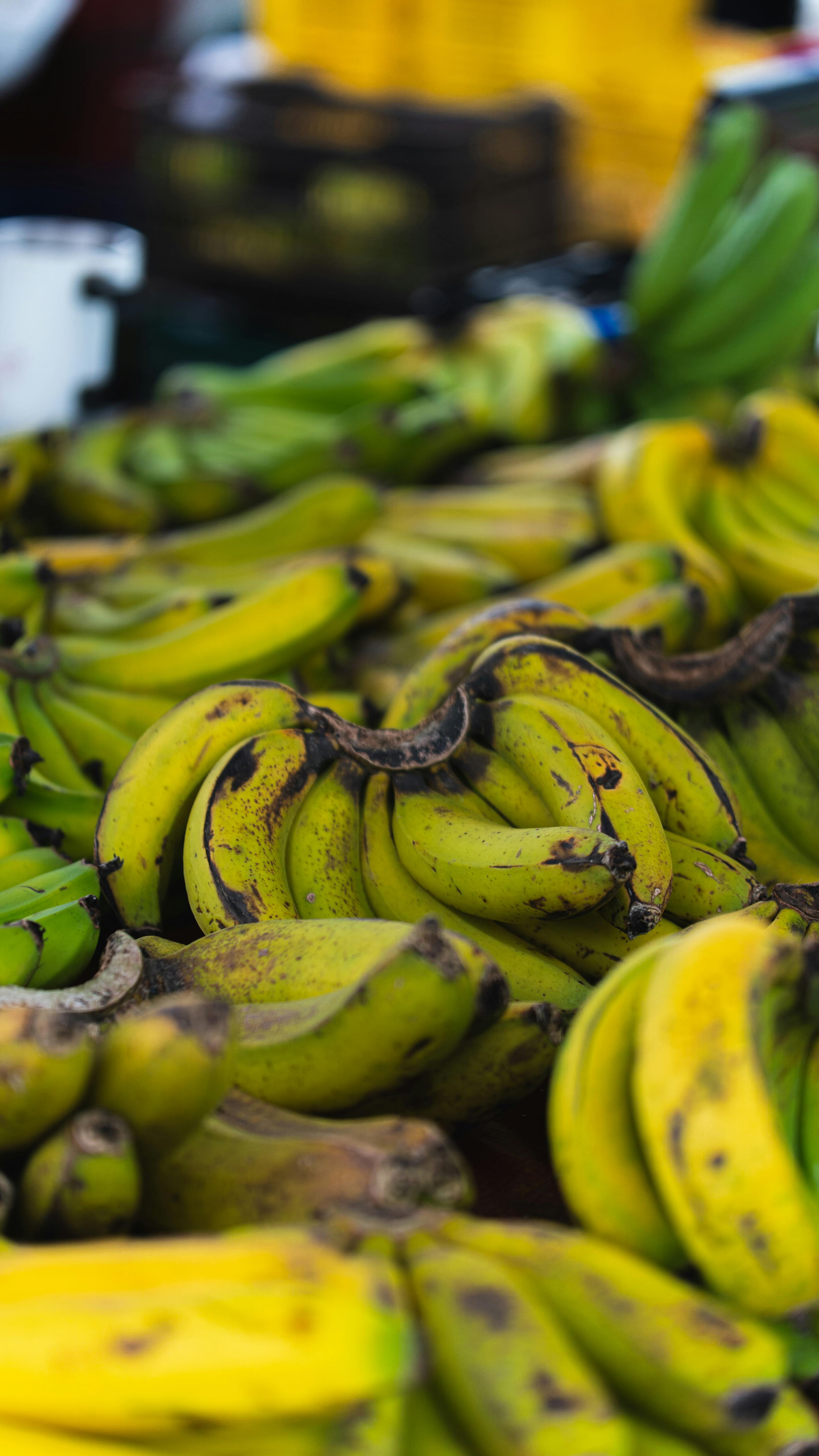
Since bananas are picked off the tree while they’re still green, it’s not unusual to see them this color in the store. Base your choice of bananas depending upon when you want to consume them. Bananas with more green coloration will take longer to ripen than those more yellow in hue and/or with brown spots.
Bananas should be firm, but not too hard, bright in appearance, and free from bruises or other injuries. Their stems and tips should be intact. The size of the banana does not affect its quality, so simply choose the size that best meets your needs.
Certified organic bananas reduce exposure to pesticide residues and heavy metals. In large supermarkets, look for the USDA organic logo.
While bananas look resilient, they’re actually very fragile and care should be taken in their storage. They should be left to ripen at room temperature and should not be subjected to overly hot or cold temperatures. Unripe bananas should not be placed in the refrigerator as this will interrupt the ripening process to such an extent that it will not be able to resume even if the bananas are returned to room temperature.
If you need to hasten the ripening process, you can place bananas in a paper bag or wrap them in newspaper, adding an apple to accelerate the process. Ripe bananas that will not be consumed for a few days can be placed in the refrigerator. While their peel may darken, the flesh will not be affected. For maximum flavor when consuming refrigerated bananas, remove them from the refrigerator and allow them to come back to room temperature. For the most antioxidants, eat fully ripened fruit.
Bananas can also be frozen and will keep for about 2 months. Either puree them before freezing or simply remove the peel and wrap the bananas in plastic wrap. To prevent discoloration, add some lemon juice before freezing.
How to enjoy
In addition to being eaten raw, bananas are a wonderful addition to a variety of recipes from salads to baked goods.
A few quick serving ideas:
- A peanut butter and banana sandwich drizzled with honey is an all-time favorite comfort food for children and adults alike.
- Add chopped bananas, walnuts and maple syrup to oatmeal or porridge.
- Try our Tropical Breakfast Risotto in the Recipe File.
Individual concerns
Bananas and latex-fruit syndrome
Latex-fruit syndrom is a health problem related to the possible reaction of our immune system to certain proteins found in natural rubber (from the tree Hevea brasiliensis) and highly similar proteins found in certain foods, such as bananas. For helpful information about this topic, please see our article, An Overview of Adverse Food Reactions.
Nutritional profile
One medium banana provides vitamin B6 (25% DV), manganese (14% DV), vitamin C (14% DV), fiber (11% DV), biotin (10% DV), copper (10% DV), and potassium (422 mg, 9% DV).
A high-performance blender like the Vitamix A3500 Ascent Blender fully breaks down seeds, stems, and frozen fruit for smooth, nutrient-dense smoothies.
Recipes with Bananas
Full Nutrient Profile
Related Articles
- Adverse Food Reactions: Environment and Cross Related Reactions
- Can you tell me more about honey?
- Can you tell me more about maple syrup?
- Eating in Season: Your Need-to-Know Basics
- Healthy Eating for Less
- Kicking the Sugar Habit
- Rejuvenating Foods for Springtime
- Should I restrict my intake of naturally occurring sugars (like the sugar in fruits), or is it only added sugars that can cause problems?
- What Nutrients Are Most Likely to be Deficient in a Vegetarian Diet?
- WHFoods Approach To Controversial Foods
References
- Duan X, Cheng G, Yang E, et al. Modification of pectin polysaccharides during ripening of postharvest banana fruit. Food Chemistry, Volume 111, Issue 1, 1 November 2008, Pages 144-149. https://doi.org/10.1016/j.foodchem.2008.03.049
- Gylling H, Plat J, Turley S, et al. Plant sterols and plant stanols in the management of dyslipidaemia and prevention of cardiovascular disease. Atherosclerosis 2014;232:346-60. https://doi.org/10.1016/j.atherosclerosis.2013.11.043
- Miller KC. Plasma potassium concentration and content changes after banana ingestion in exercised men. J Athl Train 2012;47:648-54. https://doi.org/10.4085/1062-6050-47.6.05
- Mitsou EK, Kougia E, Nomikos T, et al. Effect of banana consumption on faecal microbiota: a randomized, controlled trial. Anaerobe 2011;17:384-7. https://doi.org/10.1016/j.anaerobe.2011.03.018
- Nieman DC, Gillitt ND, Henson DA, et al. Bananas as an energy source during exercise: a metabolomics approach. PLoS One 2012;7:e37479. https://doi.org/10.1371/journal.pone.0037479
- Oliveira L, Freire CS, Silvestre AJ, et al. Lipophilic extracts from banana fruit residues: a source of valuable phytosterols. J Agric Food Chem 2008;56:9520-4. https://doi.org/10.1021/jf801709t
- Prabha P, Karpagam T, Varalakshmi B, et al. Indigenous anti-ulcer activity of Musa sapientum on peptic ulcer. Pharmacognosy Res 2011;3:232-8. https://doi.org/10.4103/0974-8490.89742
- Ascherio A, Rimm EB, Hernan MA, et al. Intake of potassium, magnesium, calcium, and fiber and risk of stroke among US men. Circulation. 1998 Sep 22;98(12):1198-204. 1998. https://doi.org/10.1161/01.cir.98.12.1198
- Bazzano LA, He J, Ogden LG, Loria CM, Whelton PK. Dietary fiber intake and reduced risk of coronary heart disease in US men and women: the National Health and Nutrition Examination Survey I Epidemiologic Follow-up Study. Arch Intern Med. 2003 Sep 8;163(16):1897-904. 2003. https://doi.org/10.1016/s0140-6736(12)61766-8
- Beezhold DH, Sussman GL, Liss GM, Chang NS. Latex allergy can induce clinical reactions to specific foods. Clin Exp Allergy 1996 Apr;26(4):416-22. 1996. https://doi.org/10.1111/j.1365-2222.1996.tb00557.x
- Cho E, Seddon JM, Rosner B, Willett WC, Hankinson SE. Prospective study of intake of fruits, vegetables, vitamins, and carotenoids and risk of age-related maculopathy. Arch Ophthalmol. 2004 Jun;122(6):883-92. 2004. PMID:15197064. https://doi.org/10.1001/archopht.122.6.883
- Chow J. Probiotics and prebiotics: A brief overview.J Ren Nutr. 2002 Apr;12(2):76-86. 2002. PMID:11953920. https://doi.org/10.1053/jren.2002.31759
- Delbourg MF, Guilloux L, Moneret-Vautrin DA, Ville G. Hypersensitivity to banana in latex-allergic patients. Identification of two major banana allergens of 33 and 37 kD. Ann Allergy Asthma Immunol 1996 Apr;76(4):321-6. 1996. https://doi.org/10.1016/s1081-1206(10)60032-4
- Dunjic BS, Svensson I, Axelson J, et al. Green banana protection of gastric mucosa against experimentally induced injuries in rats. A multicomponent mechanism?. Scand J Gastroenterol 1993 Oct;28(10):894-8. 1993. https://doi.org/10.4103/0974-8490.112423
- Englberger L, Darnton-Hill I, Coyne T, Fitzgerald MH, Marks GC. Carotenoid-rich bananas: a potential food source for alleviating vitamin A deficiency. Food Nutr Bull. 2003 Dec;24(4):303-18. 2003. PMID:14870618. https://doi.org/10.1177/156482650302400401
- Ensminger AH, Esminger M. K. J. e. al. Food for Health: A Nutrition Encyclopedia. Clovis, California: Pegus Press; 1986. 1986. PMID:15210.
- Hills BA, Kirwood CA. Surfactant approach to the gastric mucosal barrier: Protection of rats by banana even when acidified. Gastroenterology 1989;97:294-303. 1989. https://doi.org/10.1016/0016-5085(89)90064-4
- Rabbani GH, Teka T, Saha SK, Zaman B, Majid N, Khatun M, Wahed MA, Fuchs GJ. Green banana and pectin improve small intestinal permeability and reduce fluid loss in Bangladeshi children with persistent diarrhea. Dig Dis Sci. 2004 Mar;49(3):475-84. 2004. PMID:15139502. https://doi.org/10.1023/b:ddas.0000020507.25910.cf
- Rao NM. Protease inhibitors from ripened and unripened bananas. Biochem Int 1991 May;24(1):13-22. 1991.
- Rashidkhani B, Lindblad P, Wolk A. Fruits, vegetables and risk of renal cell carcinoma: a prospective study of Swedish women. Int J Cancer. 2005 Jan 20;113(3):451-5. 2005. PMID:15455348. https://doi.org/10.1002/ijc.20577
- Sanchez-Monge R, Blanco C, Diaz-Perales A, et al. Isolation and characterization of major banana allergens: identification as fruit class I chitinases. Clin Exp Allergy 1999 May;29(5):673-80. 1999. https://doi.org/10.1046/j.1365-2222.1999.00526.x
- Sellmeyer DE, Schloetter DE, Schloetter M et al. Potassium citrate prevents urine calcium excretion and bone resorption induced by a high sodium chloride diet. J Clin Endo Metab 2002;87(5):2008-12. 2002. https://doi.org/10.1210/jcem.87.5.8470
- Wood, Rebecca. The Whole Foods Encyclopedia. New York, NY: Prentice-Hall Press; 1988. 1988. PMID:15220. https://doi.org/10.1002/food.19770210206
- Dunjic BS, Svensson I, Axelson J, et al. Green banana protection of gastric mucosa against experimentally induced injuries in rats. A multicomponent mechanism. Scand J Gastroenterol 1993 Oct;28(10):894-8 1993. https://doi.org/10.4103/0974-8490.112423