Almonds
Serving: 0.25 cup (23g, 132 cal)
Key Nutrients
| Nutrient | Amount | DV% | Rating |
|---|---|---|---|
| biotin | 14.72 mcg | 49% | Very Good |
| vitamin E | 6.03 mg (ATE) | 40% | Very Good |
| copper | 0.23 mg | 26% | Very Good |
| manganese | 0.53 mg | 23% | Good |
| vitamin B2 | 0.23 mg | 18% | Good |
| phosphorus | 111.32 mg | 16% | Good |
| molybdenum | 10.42 mcg | 23% | Good |
| magnesium | 61.64 mg | 15% | Good |
| fiber | 2.81 g | 11% | Good |
| tryptophan | 0.07 g | 21.9% | Good |
biotin
Very Goodvitamin E
Very Goodcopper
Very Goodmanganese
Goodvitamin B2
Goodphosphorus
Goodmolybdenum
Goodmagnesium
Goodfiber
Goodtryptophan
GoodAbout Almonds
Health benefits
Lower LDL cholesterol and reduce heart disease risk
Almonds derive roughly 73% of their calories from fat, yet their fat profile is predominantly monounsaturated oleic acid (18:1), the same fatty acid concentrated in olive oil. Five large epidemiological studies (Nurses’ Health Study, Iowa Women’s Health Study, Adventist Health Study, Physicians’ Health Study) consistently associate nut consumption with lower coronary heart disease risk. Data from the Nurses’ Health Study estimated a 30% reduction in heart disease risk when nuts replaced an equivalent amount of dietary carbohydrate. The reduction reached 45% when nut fat replaced saturated fat from meat and dairy.
A study published in the British Journal of Nutrition found additive cholesterol-lowering effects when almonds were combined with plant sterols, soy protein, and soluble fiber in a single dietary pattern. Among 12 patients with elevated LDL, this combination reduced all LDL fractions, including small dense LDL (the subfraction most associated with cardiovascular risk), with near-maximal reductions within 2 weeks.
Vitamin E in almonds (6.03 mg alpha-tocopherol per quarter cup, 40% DV) inhibits oxidation of LDL particles, a step that precedes uptake by arterial macrophages and foam cell formation. The monounsaturated fat content independently lowers LDL; in human feeding trials, substituting almonds for other fats reduced LDL cholesterol by 8-12%.
A quarter-cup serving also provides 62 mg of magnesium and 162 mg of potassium.
Magnesium relaxes vascular smooth muscle by regulating calcium ion flux across cell membranes, effectively lowering peripheral vascular resistance. Deficiency correlates with increased risk of myocardial infarction, and inadequate magnesium after a cardiac event accelerates free radical injury to myocardial tissue.
Potassium facilitates nerve transmission and muscle contraction, including cardiac rhythm. With 162 mg of potassium and only 0.2 mg of sodium per quarter cup, almonds offer a favorable electrolyte ratio for blood pressure regulation.
Almonds and blood sugar regulation
Postprandial blood sugar spikes accelerate LDL oxidation through increased free radical production. Almonds both blunt the glycemic spike and supply antioxidants to counteract residual oxidative stress (Jenkins DJ, Kendall CW, Journal of Nutrition).
In a crossover study of 15 healthy subjects given 5 meals matched for macronutrient content, the almond-containing meal increased circulating antioxidant levels over a 4-hour window while the other meals (parboiled rice, mashed potatoes, bread controls) reduced them. Blood sugar and insulin were also lower after the almond meal.
The effect is dose-dependent (Josse AR, Kendall CW, Metabolism). Nine fasting volunteers ate white bread alone or with 1, 2, or 3 ounces of almonds on separate test days. Blood glucose was sampled at baseline and at 15, 30, 45, 60, 90, and 120 minutes.
Results: one ounce of almonds barely changed the meal’s glycemic index (105.8 vs. bread alone). Two ounces dropped it to 63. Three ounces reduced it to 45.2, less than half the bread-only value. Blood sugar rise followed the same gradient: 2.8 mmol/L (bread alone) to 2.2, 2.0, and 1.6 mmol/L with increasing almond doses.
Tree nuts and cardiovascular protection
Research published in the British Journal of Nutrition (Blomhoff R, Carlsen MH) ranked several tree nuts among the plant foods with highest total antioxidant content. Walnuts measured over 20 mmol antioxidant capacity per 100 grams. Peanuts (botanically a legume) also contribute measurable antioxidant activity.
Iowa Women’s Health Study data showed total death rates declining 11% with nut or peanut butter intake once per week, and 19% with intake 1-4 times per week.
A pooled analysis of four large prospective studies (Adventist Health Study, Iowa Women’s Study, Nurses’ Health Study, Physicians’ Health Study) published in the British Journal of Nutrition (Kelly JH, Sabate J) found that consuming nuts at least 4 times weekly was associated with a 37% lower risk of coronary heart disease. Each additional weekly serving corresponded to an 8.3% further reduction in risk.
Almonds versus whole wheat muffins for blood lipids
Researchers at the University of Toronto compared daily 2.5-ounce almond snacks against whole wheat muffins matched for fat and fiber content. The almond group achieved greater LDL reduction and HDL improvement, along with better antioxidant status markers. The researchers attributed these differences to flavonoid phytonutrients concentrated in almond skins.
Whole almonds (with skins) and antioxidant synergy
A study published in the Journal of Nutrition identified 20 flavonoids in almond skins, including catechins (also found in green tea) and naringenin (found in grapefruit). Tested in isolation, almond skin flavonoids increased LDL resistance to oxidation by 18%. Combined with the alpha-tocopherol from the almond meat, LDL resistance increased by 52.5%.
“The synergy between the flavonoids and vitamin E in almonds demonstrates how the nutrients in whole foods such as almonds can impact health,” said Jeffrey Blumberg, Ph.D., director of the Antioxidants Research Laboratory at Tufts University.
Two related studies reinforce the point. One, published in the American Journal of Clinical Nutrition, found that almonds combined with soy, viscous fiber, and plant sterols reduced cholesterol comparably to first-generation statins. A second, from the same team in the European Journal of Clinical Nutrition, showed the same dietary pattern reduced C-reactive protein (an inflammatory marker) to a similar degree.
Almond-enriched diets and weight management
A trial published in the International Journal of Obesity and Related Metabolic Disorders compared two calorie-matched diets in 65 overweight and obese adults over 6 months. The almond-enriched group derived 39% of calories from fat (25% monounsaturated) while the comparison group ate 18% fat (5% monounsaturated) with 53% carbohydrate.
After 6 months, the almond group showed greater reductions in weight (18% vs. 11%), waist circumference (14% vs. 9%), body fat (30% vs. 20%), and systolic blood pressure (11% vs. 0%). Among participants with type 1 diabetes, 96% on the almond diet sustained or further reduced their medication, compared to 50% in the carbohydrate-focused group.
Nut consumption and weight gain
A 28-month prospective study published in Obesity, tracking 8,865 adults in Spain, found that participants eating nuts at least twice weekly were 31% less likely to gain 5 kg or more. Among those who did gain weight, non-nut-eaters accumulated an average of 424 g more than regular nut consumers.
The likely mechanism: nuts have high satiety value per calorie due to their fiber, protein, and fat content, which may reduce total caloric intake over time despite the caloric density of nuts themselves.
Daily almond consumption shifts overall diet quality
A study published in the British Journal of Nutrition tracked 81 adults for 6 months of habitual eating, then added roughly 2 ounces of almonds daily with no other dietary instructions for another 6 months.
During the almond phase, intakes of monounsaturated fatty acids, polyunsaturated fatty acids, fiber, vegetable protein, vitamin E, copper, and magnesium rose by 42%, 24%, 12%, 19%, 66%, 15%, and 23%, respectively. Intakes of trans fats, animal protein, sodium, cholesterol, and sugars fell by 14%, 9%, 21%, 17%, and 13%. No instruction was given to make these changes; the dietary shift occurred spontaneously as almonds displaced less nutrient-dense snack foods.
Manganese, copper, and riboflavin in mitochondrial function
Manganese and copper serve as cofactors for superoxide dismutase (SOD), the enzyme that neutralizes superoxide radicals generated during mitochondrial electron transport. A quarter-cup of almonds provides 23% DV of manganese and 26% DV of copper.
Riboflavin (vitamin B2, 18% DV per serving) participates in aerobic energy production as the precursor to flavin adenine dinucleotide (FAD) and flavin mononucleotide (FMN). These coenzymes attach to flavoprotein enzymes throughout the electron transport chain, particularly in cardiac and skeletal muscle tissue where oxygen-dependent ATP synthesis is continuous.
Riboflavin also serves a protective function: it is a cofactor for glutathione reductase, the enzyme that regenerates reduced glutathione from its oxidized form. Glutathione is the primary intracellular antioxidant that prevents oxidative damage to mitochondrial membranes and DNA.
Gallstone risk reduction
Twenty years of Nurses’ Health Study data on over 80,000 women found that consuming at least 1 ounce of nuts, peanuts, or peanut butter weekly was associated with a 25% lower risk of developing gallstones. One ounce equals approximately 23 almonds or 2 tablespoons of almond butter.
Description
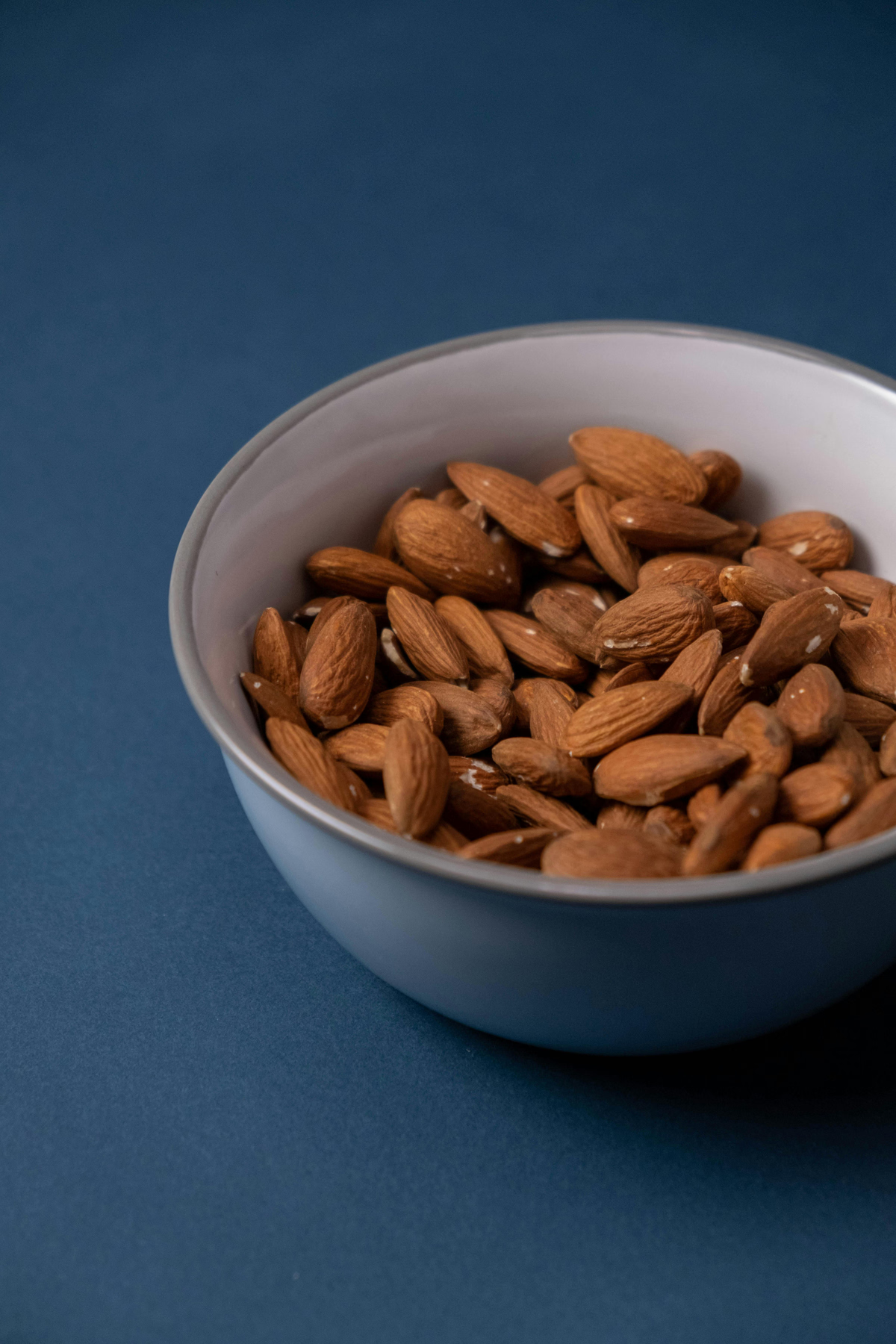
The almond that we think of as a nut is technically the seed of the fruit of the almond tree, a glorious medium-size tree that bears fragrant pink and white flowers. Like its cousins, the peach, cherry and apricot trees, the almond tree bears fruits with stone-like seeds (or pits) within. The seed of the almond fruit is what we refer to as the almond nut.
Almonds are off-white in color, covered by a thin brownish skin, and encased in a hard shell. Almonds are classified into two categories: sweet (Prunus amygdalu var. dulcis) and bitter (Prunus amygdalu var. amara).
Sweet almonds are the type that is eaten. They are oval in shape, usually malleable in texture and wonderfully buttery in taste. They are available in the market either still in their shell or with their shell removed. Shelled almonds are available whole, sliced or slivered in either their natural form, with their skin, or blanched, with their skin removed.
Bitter almonds are used to make almond oil that is used as a flavoring agent for foods and liqueurs such as Amaretto. They are otherwise inedible as they naturally contain toxic substances such as hydrocyanic acid. These compounds are removed in the manufacturing of almond oil.
History
Almonds are an ancient food that have been written about in historical texts, including the Bible. Almonds were thought to have originated in regions in western Asia and North Africa. The Romans referred to almonds as the “Greek nut” in reference to the civilization suggested to have first cultivated them.
Almonds are now grown in many of the countries that border the Mediterranean Sea including Spain, Italy, Portugal and Morocco, as well as in California. The cultivation of almonds in California, the only state that produces them, has an interesting history. Almond trees were originally brought to California centuries ago when missions were created by the Spanish, but cultivation of the trees was abandoned when the missions were closed. Almond trees found their way back to California in the 19th century via the eastern United States. In 1840, almond trees were brought over from Europe and were first planted in New England. Because the climate on the Eastern seaboard did not support their cultivation, the trees were brought to California where they thrived and continue to do so.
How to select and store
Almonds that are still in their shells have the longest shelf life. If purchasing these, look for shells that are not split, moldy or stained. Shelled almonds that are stored in an hermetically sealed container will last longer than those that are sold in bulk bins since they are less exposed to heat, air and humidity. If purchasing almonds in bulk bins, make sure that the store has a quick turnover of inventory and that the bulk containers are sealed well in order to ensure maximum freshness. Look for almonds that are uniform in color and not limp or shriveled. In addition, smell the almonds. They should smell sweet and nutty; if their odor is sharp or bitter, they are rancid.
If you want almonds with a roasted flavor and texture, choose those that have been “dry roasted” as they are not cooked in oil like their regular roasted counterparts. Yet, even when purchasing “dry roasted” almonds, it is important to read the label to be sure that no additional ingredients such as sugar, corn syrup or preservatives have been added.
Since almonds have a high fat content, it is important to store them properly in order to protect them from becoming rancid. Store shelled almonds in a tightly sealed container, in a cool dry place away from exposure to sunlight. Keeping them cold will further protect them from rancidity and prolong their freshness. Refrigerated almonds will keep for several months, while if stored in the freezer, almonds can be kept for up to a year. Shelled almond pieces will become rancid more quickly than whole shelled almonds. Almonds still in the shell have the longest shelf life.
How to enjoy
In addition to being eaten raw, almonds are a wonderful addition to a variety of recipes from salads to baked goods.
For some of our favorite recipes, click Recipes.
Preparation
Whole shelled almonds can be chopped by hand or can be placed in a food processor. If using a food processor, it is best to pulse on and off a few times, instead of running the blade constantly, as this will help ensure that you end up with chopped almonds rather than almond butter.
To roast almonds at home, do so gently—in a 160-170°F (about 75°C) oven for 15-20 minutes—to preserve the healthy oils.
Blanching removes the skin, which contains much of the almond’s flavonoid content. As noted above, almond skin flavonoids and almond meat vitamin E act synergistically, more than doubling antioxidant protection compared to either component alone.
A few quick serving ideas:
Add a punch to plain yogurt by mixing in some chopped almonds and dried fruit.
Enhance a healthy saute of curried vegetables with sliced almonds.
Add some almond butter to a breakfast shake to boost its taste and protein content.
Almonds and apple slices make a wonderfully simple, on-the-go power snack.
Make a delightful cold rice salad with almonds, fresh garden peas and currants.
Add sliced almonds to chicken salad.
Individual concerns
Oxalate content
Almonds have consistently been determined to have high oxalate content. Oxalates are naturally occurring organic acids found in a wide variety of foods, and in the case of certain medical conditions, they must be greatly restricted in a meal plan to prevent over-accumulation inside the body. Our comprehensive article about oxalates will provide you with practical and detailed information about these organic acids, food, and health.
Almonds and food allergies
Tree nuts, such as almonds, are among the eight food types considered to be major food allergens in the U.S., requiring identification on food labels. For helpful information about this topic, please see our article, An Overview of Adverse Food Reactions.
Nutritional profile
Almonds provide notable quantities of vitamin E (40% DV), biotin (49% DV), manganese (23% DV), and copper (26% DV) per quarter-cup serving. They are also a source of magnesium (15% DV), molybdenum (15% DV), riboflavin (18% DV), and phosphorus (16% DV). Of the approximately 11 grams of fat per serving, 7 grams consist of monounsaturated oleic acid.
Toasting nuts and seeds on a heavy-gauge Nordic Ware Natural Half Sheet Pan (2-Pack) brings out their natural oils and deepens flavor — a simple step that makes a real difference.
Recipes with Almonds
Full Nutrient Profile
Related Articles
- A New Way of Looking at Fats
- Adverse Food Reactions: Environment and Cross Related Reactions
- Allergies
- Can salads be a good source of calcium?
- Can you tell me about oxalates, including the foods that contain them and how are they related to nutrition and health?
- Can you tell me more about adverse reactions to cow's milk?
- Do I need to eat dairy products in order to prevent osteoporosis?
- How can my diet help protect me from sunburn?
- How the healthy fats in nuts help protect against cardiovascular disease
- How to Help Avoid the Swine Flu and Seasonal Flu by Strengthening Your Immune System with the World's Healthiest Foods
- Is it true that beginning in September 2007 all almonds grown in California will be required to be pasteurized? If so, what are the health implications of this?
- The Safety of Our Food
- What Is the best way to roast nuts and seeds?
- Why the Healthiest Way of Eating Is Also the World's Safest Way of Eating
References
- Abbey M, Noakes M, Belling GB, Nestel PJ. Partial replacement of saturated fatty acids with almonds or walnuts lowers total plasma cholesterol and low-density-lipoprotein cholesterol. Am J Clin Nutr 1994 May;59(5):995-9. 1994. PMID:16240. https://doi.org/10.1159/000308595
- Bes-Rastrollo M, Sabate J, Gomez-Gracia E, Alonso A, Martinez JA, Martinez-Gonzalez MA. Nut consumption and weight gain in a Mediterranean cohort: The SUN study. Obesity (Silver Spring). 2007 Jan;15(1):107-16. 2007. PMID:17228038. https://doi.org/10.1038/oby.2007.507
- Blomhoff R, Carlsen MH, Andersen LF, Jacobs DR Jr. Health benefits of nuts: potential role of antioxidants. Br J Nutr. 2006 Nov;96 Suppl 2:S52-60. 2006. PMID:17125534. https://doi.org/10.1017/bjn20061864
- Chen CY, Milbury PE, Lapsley K, Blumberg JB. Flavonoids from almond skins are bioavailable and act synergistically with vitamins C and E to enhance hamster and human LDL resistance to oxidation. J Nutr. 2005 Jun;135(6):1366-73. 2005. PMID:15930439. https://doi.org/10.1093/jn/135.6.1366
- Durlach J. Commentary on recent clinical advances: almonds, monounsaturated fats, magnesium and hypolipidaemic diets. Magnes Res 1992 Dec;5(4):315. 1992. PMID:16250.
- Ensminger AH, Esminger M. K. J. e. al. Food for Health: A Nutrition Encyclopedia. Clovis, California: Pegus Press; 1986. 1986. PMID:15210.
- Fraser GE. Nut consumption, lipids, and risk of a coronary event. Clin Cardiol 1999 Jul;22(7 Suppl):III11-5. 1999. https://doi.org/10.1002/clc.4960221504
- Hu FB, Stampfer MJ. Nut consumption and risk of coronary heart disease: a review of epidemiologic evidence. Curr Atheroscler Rep 1999 Nov;1(3):204-9. 1999. https://doi.org/10.1007/s11883-999-0033-7
- Jaceldo-Siegl K, Sabate J, Rajaram S, Fraser GE. Long-term almond supplementation without advice on food replacement induces favourable nutrient modifications to the habitual diets of free-living individuals. Br J Nutr. 2004 Sep;92(3):533-40. 2004. PMID:15469659. https://doi.org/10.1079/bjn20041223
- Jambazian P, Haddad E, Rajaram S, Tanzman J, Sabate J. Almonds in the diet simultaneously improve plasma alpha- tocopherol concentrations and reduce plasma lipids. J Am Dietetic Assoc. 2005 March;105(3), 449-454. 2005. PMID:15746835. https://doi.org/10.1016/j.jada.2004.12.002
- Jenkins DJ, Kendall CW, Josse AR, Salvatore S, Brighenti F, Augustin LS, Ellis PR, Vidgen E, Rao AV. Almonds decrease postprandial glycemia, insulinemia, and oxidative damage in healthy individuals. J Nutr. 2006 Dec;136(12):2987-92. 2006. PMID:17116708. https://doi.org/10.1093/jn/136.12.2987
- Jenkins DJ, Kendall CW, Marchie A, Faulkner DA, Josse AR, et al. Direct comparison of dietary portfolio vs. statin on C-reactive protein. Eur J Clin Nutr. 2005 May 18; [Epub ahead of print]. 2005. PMID:15900306. https://doi.org/10.1038/sj.ejcn.1602152
- Jenkins DJ, Kendall CW, Marchie A, Faulkner DA, Wong JM, et al. Direct comparison of a dietary portfolio of cholesterol-lowering foods with a statin in hypercholesterolemic participants. Am J Clin Nutr. 2005 Feb;81(2):380-7. 2005. PMID:15699225. https://doi.org/10.1093/ajcn.81.2.380
- Josse AR, Kendall CW, Augustin LS, Ellis PR, Jenkins DJ. Almonds and postprandial glycemia--a dose-response study. Metabolism. 2007 Mar;56(3):400-4. 2007. PMID:17292730. https://doi.org/10.1016/j.metabol.2006.10.024
- Kelly JH Jr, Sabate J. Nuts and coronary heart disease: an epidemiological perspective. Br J Nutr. 2006 Nov;96 Suppl 2:S61-7. 2006. PMID:17125535. https://doi.org/10.1017/bjn20061865
- Lamarche B, Desroches S, Jenkins DJ, Kendall CW, Marchie A, Faulkner D, Vidgen E, Lapsley KG, Trautwein EA, Parker TL, Josse RG, Leiter LA, Connelly PW. Combined effects of a dietary portfolio of plant sterols, vegetable protein, viscous fibre and almonds on LDL particle size. Br J Nutr. 2004 Oct;92(4):657-63. 2004. PMID:15522135. https://doi.org/10.1079/bjn20041241
- Lim GP, Chu T, Yang F, et al. The curry spice curcumin reduces oxidative damage and amyloid pathology in an Alzheimer transgenic mouse. J Neurosci 2001 Nov 1;21(21):8370-7. 2001. PMID:16240. https://doi.org/10.1159/000308595
- Margen S and the Editor, Univ of California at Berkley Wellness Letter. The Wellness Encyclopedia of food and nutrition. New York: Health Letter Associates 1992. 1992.
- Tsai CJ, Leitzmann MF, Hu FB, Willett WC, Giovannucci EL. Frequent nut consumption and decreased risk of cholecystectomy in women. Am J Clin Nutr. 2004 Jul;80(1):76-81. 2004. PMID:15213031. https://doi.org/10.1093/ajcn/80.1.76
- Wien MA, Sabate JM, Ikle DN, Cole SE, Kandeel FR. Almonds vs complex carbohydrates in a weight reduction program. Int J Obes Relat Metab Disord. 2003 Nov;27(11):1365-72. 2003. https://doi.org/10.1038/sj.ijo.0802411
- Wood, Rebecca. The Whole Foods Encyclopedia. New York, NY: Prentice-Hall Press; 1988. 1988. PMID:15220. https://doi.org/10.1002/food.19770210206
- Zittlau E. [Effect of sweet almonds on the stress ulcer in rats]. Dtsch Tierarztl Wochenschr 1985 Apr 9;92(4):151-4. 1985. PMID:16260. https://doi.org/10.1073/pnas.74.4.1421