Celery
Serving: 1.00 cup (101g, 16 cal)
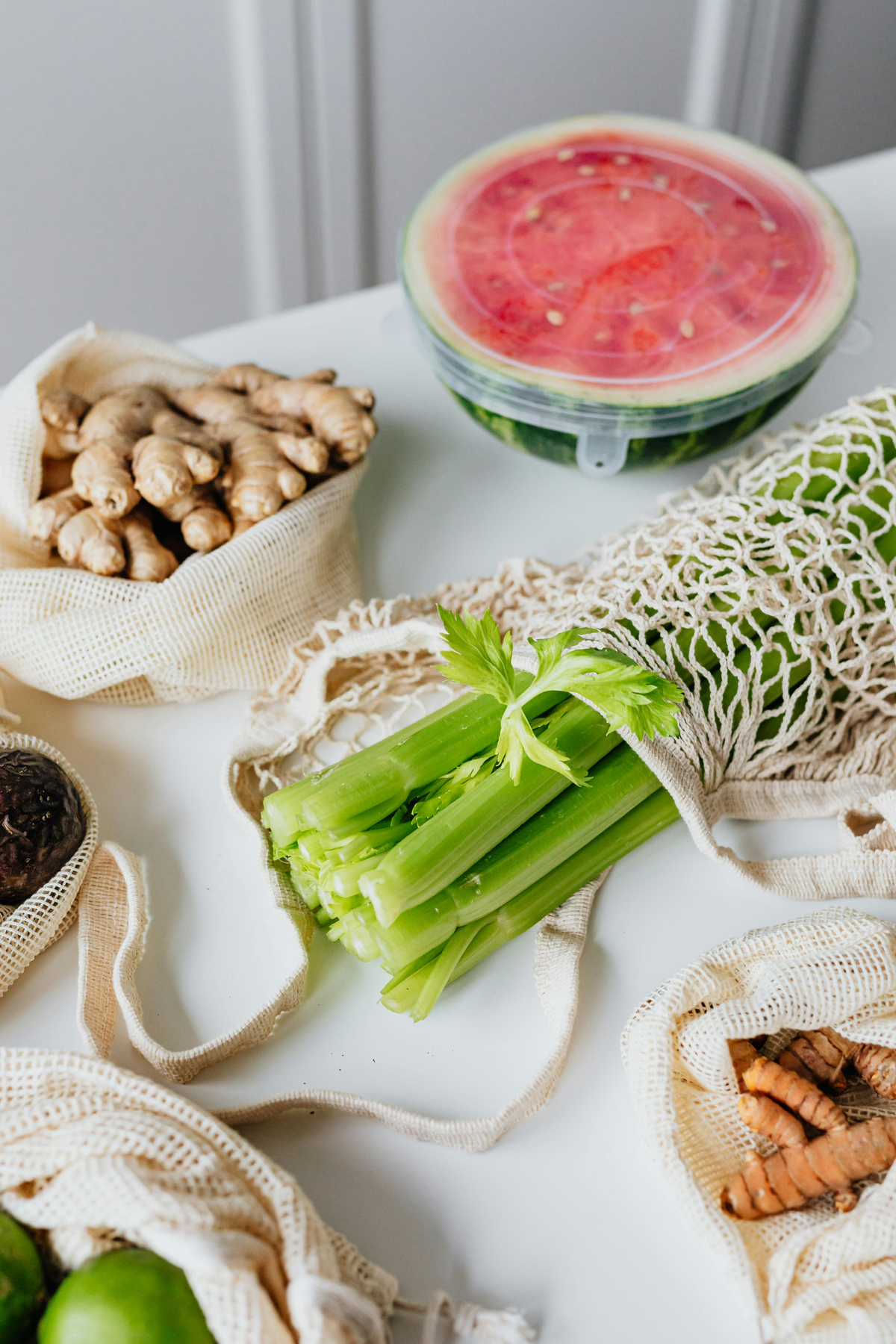
Key Nutrients
| Nutrient | Amount | DV% | Rating |
|---|---|---|---|
| vitamin K | 29.59 mcg | 33% | Excellent |
| molybdenum | 0 mcg | 0% | Excellent |
| folate | 36.36 mcg | 9% | Very Good |
| potassium | 262.6 mg | 6% | Very Good |
| pantothenic acid | 0.25 mg | 5% | Very Good |
| fiber | 1.4 g | 5% | Very Good |
| vitamin B2 | 0.06 mg | 5% | Good |
| copper | 0 mg | 0% | Good |
| manganese | 0.1 mg | 4% | Good |
| vitamin C | 3.13 mg | 4% | Good |
| vitamin B6 | 0.07 mg | 4% | Good |
| calcium | 40.4 mg | 4% | Good |
| phosphorus | 24.24 mg | 3% | Good |
| magnesium | 11.11 mg | 3% | Good |
| vitamin A | 22.67 mcg RAE | 3% | Good |
| tryptophan | 0.01 g | 3.1% | Good |
| vitamin B5 | 0.25 mg | 2.5% | Good |
vitamin K
Excellentmolybdenum
Excellentfolate
Very Goodpotassium
Very Goodpantothenic acid
Very Goodfiber
Very Goodvitamin B2
Goodcopper
Goodmanganese
Goodvitamin C
Goodvitamin B6
Goodcalcium
Goodphosphorus
Goodmagnesium
Goodvitamin A
Goodtryptophan
Goodvitamin B5
GoodAbout Celery
What’s new and beneficial about celery
- Celery contains unique non-starch polysaccharides, including apiuman, that reduce inflammatory markers in the digestive tract in animal studies. Unlike starchy polysaccharides that store simple sugars, these pectin-derived structural compounds appear to inhibit pro-inflammatory signaling in gut tissue.
- Beyond vitamin C and common flavonoids, celery contains at least a dozen distinct phenolic antioxidant compounds. These include dihydrostilbenoids like lunularin, furanocoumarins like bergapten and psoralen, and flavones like apigenin and luteolin. Together, these phenolics reduce oxidative damage to lipids, blood vessel walls, and cell membranes in animal models.
- Steaming preserves 83-99% of celery’s phenolic antioxidants after 10 minutes, while boiling and blanching (3-minute submersion in boiling water) destroy 38-41% of these compounds. The difference is significant for anyone concerned about retaining the luteolin, apigenin, and quercetin content of cooked celery.
- Fresh celery retains most of its phenolic antioxidants for 5-7 days under refrigeration. After that window, measurable losses occur. Chopping accelerates flavonoid degradation, so cutting celery just before use preserves more of its quercetin and kaempferol content than overnight refrigerator storage of pre-cut pieces.
Celery, diced, raw
1.00 cup
(101.00 grams)
Calories: 16
GI: very low
NutrientDRI/DV
vitamin K33%
molybdenum11%
folate9%
potassium6%
pantothenic acid5%
vitamin B25%
fiber5%
manganese4%
copper4%
calcium4%
vitamin C4%
vitamin B64%
phosphorus3%
magnesium3%
vitamin A3%
- Health Benefits
- Description
- History
- How to Select and Store
- Tips for Preparing and Cooking
- How to Enjoy
- Nutritional Profile
- References
Health benefits
Antioxidant and anti-inflammatory support provided by celery
Celery provides vitamin C, beta-carotene, and manganese. But the more distinctive aspect of its antioxidant profile is the concentration of phenolic compounds, many of which also inhibit inflammatory pathways. Below is a representative list of the phenolic antioxidants identified in celery.
- Phenolic acids
- caffeic acid
- caffeolyquinic acid
- cinnamic acid
- coumaric acid
- ferulic acid
- Flavones
- apigenin
- luteolin
- Flavonols
- quercetin
- kaempferol
- Dihydrostilbenoids
- lunularin
- Phytosterols
- beta-sitosterol
- Furanocoumarins
- bergapten
- psoralen
In animal studies, celery extracts containing these phytonutrients decreased oxidative damage to circulating lipids and blood vessel endothelium. The extracts also reduced inflammatory reactions in digestive tract and vascular tissue. Separate animal research found that celery extracts helped protect the digestive tract and liver from acrylamide exposure. (Acrylamides are potentially toxic substances formed through Maillard reactions between sugars and amino acids during frying.)
Most of this research involves animal models rather than human subjects. However, one dietary analysis found celery provides 7% of all flavonol and flavone antioxidant intake in the diets of adults in China. Human studies have demonstrated more specific mechanisms: celery juice and celery extracts lower the activity of tumor necrosis factor alpha (TNF-alpha) and nuclear factor kappa B (NF-kB). These same studies measured decreased levels of pro-inflammatory cytokines interleukin 1B (IL-1B) and interleukin 8 (IL-8). All four signaling molecules drive inflammatory cascades, and their suppression represents a concrete anti-inflammatory mechanism.
Celery produces furanocoumarins as a stress response, both in the ground before harvest and on the cutting board afterward. Chopping triggers increased furanocoumarin synthesis in the severed tissue. This does not make chopped celery “better” nutritionally; other phytonutrients decrease as furanocoumarins rise. The net effect is a shift in phytonutrient composition rather than an overall increase.
Digestive tract support provided by celery
Beyond its phenolic compounds, celery contains pectin-based polysaccharides with specific gastric benefits. These are non-starch polysaccharides built largely from glucuronic acid, distinct from the starchy polysaccharides that plants use for sugar storage. Apiuman, one of these pectin-derived compounds, appears particularly active in the stomach. In animal studies, celery extracts containing apiuman improved stomach lining integrity, reduced gastric ulcer formation, and modulated gastric secretion levels. Human studies confirming these effects from dietary celery intake are still needed.
Cardiovascular support provided by celery
The antioxidant and anti-inflammatory properties described above have logical relevance to cardiovascular health, since oxidative stress and chronic vascular inflammation drive atherosclerosis. Most studies to date are animal-based, but they have found connections between celery’s pectin-based polysaccharides and reduced cardiovascular inflammation. Celery flavonoids show similar associations.
Phthalides, the phenolic compounds responsible for celery’s distinctive flavor, represent another cardiovascular-relevant compound class. Sedanenolide and butylphthalide are two phthalides found in celery. These compounds relax vascular smooth muscle, likely by modulating calcium and potassium ion channels in smooth muscle cells and associated nervous system signaling. When smooth muscle in blood vessel walls relaxes, the vessels dilate and blood pressure drops (vasodilation).
Celery phthalides may also have diuretic activity, which would further reduce vascular pressure. A caveat: most phthalide research has used celery seeds, celery oil, or concentrated extracts rather than whole food. Whether dietary amounts of celery stalks deliver sufficient phthalides for measurable blood pressure effects remains unconfirmed.
Other health benefits of celery
Chronic oxidative stress and excessive inflammation contribute to the development of many cancer types, which has led to speculation about celery’s potential anticancer effects. Hypotheses have been raised regarding stomach, colon, and bladder cancer. However, no published human studies have tested these hypotheses directly. The connection remains theoretical.
Description
In most U.S. markets, the Pascal family of greenish to pale-green celery cultivars dominates the produce section. Pascal celery is larger than most other celery types, with firm, solid stalks and leafy ends. Yet even within this particular scientific type of celery (Apium graveolens var. dulce), there are many other options including Matador, Red Stalk, Tango, and Sonora. Celery actually comes in a variety of colors from sheer white to vibrant gold to rich red and deep green.
In this genus/species of plant (Apium graveolens) are also found two other important types of celery. The first is celeriac (also called root celery, turnip-root celery, or knob celery). Just like the name suggests, root celery is characterized by a large root ball, which is especially prized for its unique somewhat nut-like taste. (The scientific name for celeriac is Apium graveolens var. rapaceum.) The second type of celery is leafy celery (Apium graveolens var. secalinum), which looks very similar to parsley but tastes like celery! Root and leaf celeries are valued worldwide for their unique flavors and aromas; they are often “main plate” vegetables rather than salad or soup additions.
Regardless of which celery variety you choose to buy or grow, there are nutrient benefits to be found in all parts of the plant, including the leaves, stalks, roots, and seeds. “Celery hearts” usually refers to the innermost stalks of Pascal celery. These stalks are typically the most tender.
The bigger family of plants that houses celery is what scientists call the Apiaceae or Umbelliferae family. It is also commonly known as the parsley or carrot family. (Just compare leafy carrot tops or parsley leaves with celery leaves and you’ll see why.) In addition to celery, carrots, and parsley, this plant family also includes dill, fennel, cilantro/coriander, parsnip, anise, caraway, chervil, cumin, angelica, and asafetida.
History
Over time, many different types of plants across the world have been referred to by the common name “wild celery.” Most of these plants (though not all) belong to the same family (Apiaceae/Umbellerifereae) as the Pascal celery found in U.S. markets. You’ll find Australian celery, Vietnamese celery, Indian celery, Maori celery, and water celery all being referred to as “wild celery” in various cultures.
The direct ancestors of Pascal celery were cultivated in parts of Europe and the Mediterranean as early as 1000 BC. Archaeological evidence points to celery being used as a medicinal plant in ancient Egypt. There’s also evidence that ancient Greek athletes were awarded celery leaves to commemorate their winning.
Today over 1 billion pounds of celery are produced each year in the United States, with California, Michigan and Florida accounting for about 80% of all celery production. The average U.S. adult eats about 6 pounds of celery per year. A substantial amount of celery in the U.S. comes from Mexico, and the U.S. exports about 200 million pounds of celery to Canada each year.
On a worldwide basis, celery is often served as a “major plate vegetable” rather than an additive to salads or soups. In addition, root celery varieties of this food (chosen for their large root balls rather then their stalks) are often cultivated over the large stalk Pascal varieties that have become most popular in the U.S.
How to select and store
Choose celery that looks crisp and snaps easily when pulled apart. It should be relatively tight and compact and not have stalks that splay out. The leaves should be pale to bright green in color and free from yellow or brown patches. Sometimes celery can have a condition called “blackheart” that is caused by insects. To check for damage, separate the stalks and look for brown or black discoloration. In addition, evaluate the celery to ensure that it does not have a seed stem, the presence of a round stem in the place of the smaller tender stalks that should reside in the center of the celery. Celery with seed stems are often more bitter in flavor.
Certified organically grown celery is preferable. Repeated research studies on organic foods as a group show that exposure to contaminants such as pesticides and heavy metals can be greatly reduced through the purchase of certified organic produce, including celery. In many cases, you may be able to find a local organic grower who sells celery but has not applied for formal organic certification either through the U.S. Department of Agriculture (USDA) or through a state agency. (Examples of states offering state-certified organic foods include California, New York, Oregon, Vermont, and Washington.) However, if you are shopping in a large supermarket, your most reliable source of organically grown celery is very likely to be celery that displays the USDA organic logo.
Most people use plastic produce bags to bring celery (and other fresh vegetables) home from the market. If this method is the one you use, you can leave your celery in the plastic produce bag, squeeze out any extra air, and close the bag securely for storage in your refrigerator. While food storage in plastic bags can create health risks under certain circumstances, 5-7 days of refrigerator storage for an uncut head of celery is not one of them. The refrigerator temperature is too cold (about 40°F/4°C), the time period too short, and the celery-to-plastic surface contact too moderate to create a substantial health risk from this use of a plastic produce bag. If possible, please recycle the plastic bag after using.
A 5-7 day window is recommended for refrigerating fresh celery. While some nutrients remain stable in whole, refrigerated celery beyond this period, phenolic antioxidants show measurable losses after one week. Flavonoid content also declines in pre-chopped celery stored overnight, so cutting just before use preserves more of these compounds. If advance preparation is necessary, a hard plastic or glass container is preferable to a soft plastic bag, since cut celery has more exposed surface area in contact with less stable bag materials. Vitamin C content, among other nutrients, degrades more slowly under refrigeration.
The rationale for refrigerating celery involves four factors that affect nutrient composition during storage: exposure to air, exposure to light, exposure to heat, and length of time in storage. Vitamin C, vitamin B6, and carotenoids are good examples of nutrients highly susceptible to heat, and for this reason, their loss from food is very likely to be slowed down through refrigeration.
Freezing will make celery wilt and should be avoided unless you will be using it in a future cooked recipe.
Tips for preparing and cooking
Preparation
To clean celery, cut off the base and leaves, then wash the leaves and stalks under running water. Cut the stalks into pieces of desired length. If the outside of the celery stalk has fibrous strings, remove them by making a thin cut into one end of the stalk and peeling away the fibers. The leaves contain the highest concentrations of vitamin C, calcium, and potassium, but should be used within a day or two as they do not store well.
Celery should not be kept at room temperature for more than several hours. That’s because warm temperatures will encourage its high water content to evaporate, causing the celery to have have a tendency to wilt too quickly. If you have celery that has wilted, sprinkle it with a little water and place it in the refrigerator for several hours to help it regain some of its crispness.
How to enjoy
Serving ideas
- Add chopped celery to your favorite tuna fish or chicken salad recipe.
- Enjoy the delicious tradition of eating peanut butter on celery stalks.
- Use celery leaves in salads.
- Braise chopped celery, radicchio and onions and serve topped with walnuts and your favorite soft cheese.
- Next time you are making fresh squeezed carrot juice give it a unique taste dimension by adding some celery to it.
- Add celery leaves and sliced celery stalks to soups, stews, casseroles, and Healthy Stir-Fries.
- Consider the purchase of celery in its non-Pascal varieties. Root celery can be served as a major plate vegetable all its own, and leaf celery can be substituted for parsley in almost any recipe.
For recipe ideas, see Recipes.
Nutritional profile
One cup (101g) at 16 calories provides vitamin K (33% DV), molybdenum (11% DV). Additional nutrients include folate (9% DV), potassium (6% DV), pantothenic acid (5% DV), fiber (5% DV), vitamin B2 (5% DV), copper (4% DV), manganese (4% DV), vitamin C (4% DV), among others. Celery is a concentrated source of phenolic phytonutrients with antioxidant and anti-inflammatory properties. These phytonutrients include: caffeic acid, caffeoylquinic acid, cinnamic acid, coumaric acid, ferulic acid, apigenin, luteolin, quercetin, kaempferol, lunularin, beta-sitosterol and furanocoumarins.
Celery also contains approximately 35 milligrams of sodium per stalk, so salt-sensitive individuals can enjoy celery, but should keep track of this amount when monitoring daily sodium intake.
Individual concerns
Birch-mugwort-celery syndrome
Some health problems are related to a phenomenon called “cross-reactivity” in which a person with environmental allergies also develops allergies to certain foods. In most of these cases, a small area on the surface of a food protein is exactly like a small area on a protein found in a plant’s pollen. If a person’s immune system reacts to the pollen, it will react to the food as well. In the case of celery, researchers have identified a syndrome called birch-mugwort-celery syndrome in which this exact type of cross reactivity occurs. (In technical terms, they have found that the Api g 1 epitope on some celery proteins is a homologue for the Bet v 1 epitope in birch pollen.) If you are a person with a known allergy to birch trees or mugwort, celery should definitely be excluded from your meal plan. If you are a person who suspects that you might have environmental allergies but don’t know for sure, you may want to consult with an allergy specialist who can help you determine if you have allergies and what plants are involved. Finally, if you are a person who suspects that you might be having allergic reactions to celery, you may want to check and see whether you test positively for environmental allergies to birch and mugwort pollen as well. While birch-mugwort-celery syndrome is relative rare, it can sometimes be quite severe and is worth identifying if you suspect any of the allergies described above.
Celery and pesticide residues
Virtually all municipal drinking water in the United States contains pesticide residues, and with the exception of organic foods, so do the majority of foods in the U.S. food supply. Even though pesticides are present in food at very small trace levels, their negative impact on health is well documented. The liver’s ability to process other toxins, the cells’ ability to produce energy, and the nerves’ ability to send messages can all be compromised by pesticide exposure. According to the Environmental Working Group’s 2014 report “Shopper’s Guide to Pesticides,” conventionally grown celery is among the top 12 fruits and vegetables on which pesticide residues have been most frequently found. Therefore, individuals wanting to avoid pesticide-associated health risks may want to avoid consumption of celery unless it is grown organically.
For sautéing, a tri-ply stainless pan like the All-Clad D3 Stainless Sauté Pan gives you even heat and a good sear without non-stick coatings.
Recipes with Celery
Full Nutrient Profile
Related Articles
- Adverse Food Reactions: Environment and Cross Related Reactions
- Can I effectively wash off pesticides from my fruits and vegetables?
- Can salads be a good source of calcium?
- Can you tell me about oxalates, including the foods that contain them and how are they related to nutrition and health?
- Can you tell me more about chlorophyll, including what foods it can be found in and the effect that cooking has upon it?
- Do I need to eat dairy products in order to prevent osteoporosis?
- Flattering with Fennel
- Healthy Eating for Less
- How Does Cutting, Slicing, and Chopping Affect Fresh Vegetables?
- How popular are organic foods and why have they become a food trend?
- I've heard a lot about eating a "colorful diet." Should I pick fruits and vegetables based on color to help me get more benefits from these foods?
- Organic foods higher in vitamins, minerals, phytonutrients, lower in nitrates
- Veggie Advisor: Why are Vegetables So Indispensable for Healthy Eating?
- What are some of the best lettuces to include in my meal plan?
- What is the dirty dozen?
- Which foods contain chlorophyll, and in what amount?
- Which fruits and vegetables contain the most pesticide residues?
- Why the Healthiest Way of Eating Is Also the World's Safest Way of Eating
References
- Al-Howiriny T, Alsheikh A, Alqasoumi S et al. Gastric antiulcer, antisecretory and cytoprotective properties of celery (Apium graveolens) in rats. Pharm Biol. 2010 Jul;48(7):786-93. https://doi.org/10.1055/s-0035-1545238
- Hostetler G, Riedl K, Cardenas H et al. Flavone deglycosylation increases their anti-inflammatory activity and absorption. Mol Nutr Food Res. 2012 Apr;56(4):558-69. doi: 10.1002/mnfr.201100596. Epub 2012 Feb 20. https://doi.org/10.1002/mnfr.201100596
- Hostetler GL, Riedl KM, and Schwartz SJ. Endogenous enzymes, heat, and pH affect flavone profiles in parsley (Petroselinum crispum var. neapolitanum) and celery (Apium graveolens) during juice processing. J Agric Food Chem. 2012 Jan 11;60(1):202-8. Epub 2011 Dec 30.
- Kolarovic J, Popovic M, Zlinska J et al. Antioxidant activities of celery and parsley juices in rats treated with doxorubicin. Molecules. 2010 Sep 3;15(9):6193-204. https://doi.org/10.3390/molecules15096193
- Ovodova RG, Golovchenko VV, Popov SV et al. Chemical composition and anti-inflammatory activity of pectic polysaccharide isolated from celery stalks. Food Chemistry, Volume 114, Issue 2, 15 May 2009, Pages 610-615. https://doi.org/10.1016/j.foodchem.2008.09.094
- Page V and Schwitzguebel JP. Metabolism of sulphonated anthraquinones in rhubarb, maize and celery: the role of cytochromes P450 and peroxidases. Plant Cell Rep. 2009 Nov;28(11):1725-35. Epub 2009 Sep 19. https://doi.org/10.1007/s00299-009-0772-5
- Paglan K, Gotz-Zbikowska M, Tykwinska M et al. Celery--cause of severe anaphylactic shock. Postepy Hig Med Dosw (Online). 2012 Mar 14;66:132-4. https://doi.org/10.5604/17322693.986123
- Prisacaru AI, Andritoiu CV, Priscaru C et al. Protective effect of phthalides from apium graveolens in acrylamide intoxication. European Journal of Internal Medicine, Volume 22, Supplement 1, October 2011, Page S77.
- Rizzo V and Muratore G. Effects of packaging on shelf life of fresh celery. Journal of Food Engineering, Volume 90, Issue 1, January 2009, Pages 124-128. https://doi.org/10.1016/j.jfoodeng.2008.06.011
- Shiraga T. P104 specific inhibitory effect of celery extract on peptide transporter PEPT1 expression in the human intestinal caco-2 cells. Clinical Nutrition Supplements, Volume 4, Issue 2, 2009, Page 69. https://doi.org/10.1016/s1744-1161(09)70154-1
- Tsi D and Tan BKH. The mechanism underlying the hypocholesterolaemic activity of aqueous celery extract, its butanol and aqueous fractions in genetically hypercholesterolaemic rico rats. Life Sciences, Volume 66, Issue 8, 14 January 2000, Pages 755-767. https://doi.org/10.1016/s0024-3205(99)00646-3
- Vina SZ and Chaves AR. Respiratory activity and phenolic compounds in pre-cut celery. Food Chemistry, Volume 100, Issue 4, 2007, Pages 1654-1660. https://doi.org/10.1016/j.foodchem.2005.12.060
- Vina SZ and Chaves AR. Antioxidant responses in minimally processed celery during refrigerated storage. Food Chemistry, Volume 94, Issue 1, January 2006, Pages 68-74. https://doi.org/10.1016/j.foodchem.2004.10.051
- Yao Y and Ren G. Effect of thermal treatment on phenolic composition and antioxidant activities of two celery cultivars. LWT - Food Science and Technology, Volume 44, Issue 1, January 2011, Pages 181-185. https://doi.org/10.1016/j.lwt.2010.07.001
- Yao Y, Sang W, Zhou M et al. Phenolic composition and antioxidant activities of 11 celery cultivars. J Food Sci. 2010 Jan-Feb;75(1):C9-13. https://doi.org/10.1111/j.1750-3841.2009.01392.x
- Zhang Y, Li Y, Cao C et al. Dietary flavonol and flavone intakes and their major food sources in Chinese adults. Nutr Cancer. 2010;62(8):1120-7. https://doi.org/10.1080/01635581.2010.513800
- Zhou K, Wu B, Zhuang Y, Ding L et al. [Chemical constituents of fresh celery]. Zhongguo Zhong Yao Za Zhi. 2009 Jun;34(12):1512-5. Chinese.
- Ensminger AH, Esminger M. K. J. e. al. Food for Health: A Nutrition Encyclopedia. Clovis, California: Pegus Press; 1986 1986. PMID:15210.
- Finkelstein E, Afek U, Gross E, et al. An outbreak of phytophotodermatitis due to celery. Int J Dermatol 1994 Feb;33(2):116-8 1994. https://doi.org/10.1111/j.1365-4362.1994.tb01539.x
- Khaw KT, Bingham S, Welch A, et al. Relation between plasma ascorbic acid and mortality in men and women in EPIC-Norfolk prospective study: a prospective population study. European Prospective Investigation into Cancer and Nutrition. Lancet. 2001 Mar 3;357(9257):657-63 2001. https://doi.org/10.1016/s0140-6736(00)04128-3
- Kurl S, Tuomainen TP, Laukkanen JA et al. Plasma vitamin C modifies the association between hypertension and risk of stroke. Stroke 2002 Jun;33(6):1568-73 2002. https://doi.org/10.1161/01.str.0000017220.78722.d7
- Tsi D, Tan BK. The mechanism underlying the hypocholesterolaemic activity of aqueous celery extract, its butanol and aqueous fractions in genetically hypercholesterolaemic RICO rats. Life Sci 2000 Jan 14;66(8):755-67 2000. https://doi.org/10.1016/s0024-3205(99)00646-3
- Wood, Rebecca. The Whole Foods Encyclopedia. New York, NY: Prentice-Hall Press; 1988 1988. PMID:15220. https://doi.org/10.1002/food.19770210206