Navy beans
Serving: 1.00 cup (182g, 255 cal)
Key Nutrients
| Nutrient | Amount | DV% | Rating |
|---|---|---|---|
| fiber | 19.11 g | 68% | Very Good |
| folate | 254.8 mcg | 64% | Very Good |
| copper | 0.38 mg | 42% | Good |
| manganese | 0.96 mg | 42% | Good |
| phosphorus | 262.08 mg | 37% | Good |
| vitamin B1 | 0.43 mg | 36% | Good |
| protein | 14.98 g | 30% | Good |
| iron | 4.3 mg | 24% | Good |
| magnesium | 96.46 mg | 23% | Good |
| tryptophan | 0.18 g | 56.2% | Very Good |
fiber
Very Goodfolate
Very Goodcopper
Goodmanganese
Goodphosphorus
Goodvitamin B1
Goodprotein
Goodiron
Goodmagnesium
Goodtryptophan
Very GoodAbout Navy beans
Health benefits
One cup of cooked navy beans delivers 19.1 g of fiber (68% DV), 254.8 mcg of folate (64% DV), and 15 g of protein (30% DV) for 255 calories. The soluble fiber fraction binds bile acids in the intestine and ferries them out of the body, lowering circulating cholesterol. That same fiber slows postprandial glucose absorption, making navy beans particularly useful for individuals managing diabetes, insulin resistance, or hypoglycemia. Combined with whole grains like brown rice, navy beans form a complete amino acid profile with minimal fat.
A fiber all star
Check a chart of the fiber content in foods and you’ll see legumes leading the pack. Navy beans, like other beans, are rich in dietary fiber. Soluble fiber forms a gel-like substance in the digestive tract that combines with bile (which contains cholesterol) and ferries it out of the body. Research studies have shown that insoluble fiber not only helps to increase stool bulk and prevent constipation, but also helps prevent digestive disorders like irritable bowel syndrome and diverticulosis.
Lower your heart attack risk
In a study that examined food intake patterns and risk of death from coronary heart disease, researchers followed more than 16,000 middle-aged men in the U.S., Finland, The Netherlands, Italy, former Yugoslavia, Greece and Japan for 25 years. Typical food patterns were: higher consumption of dairy products in Northern Europe; higher consumption of meat in the U.S.; higher consumption of vegetables, legumes, fish, and wine in Southern Europe; and higher consumption of cereals, soy products, and fish in Japan. When researchers analyzed this data in relation to the risk of death from heart disease, they found that higher legume consumption was associated with a whopping 82% reduction in heart attack risk!
Navy beans’ contribution to heart health lies not just in their fiber, but in the significant amounts of folate and magnesium these beans supply. Folate helps lower levels of homocysteine, an amino acid that is an intermediate product in an important metabolic process called the methylation cycle. Elevated blood levels of homocysteine are an independent risk factor for heart attack, stroke, or peripheral vascular disease, and are found in between 20-40% of patients with heart disease. It has been estimated that consumption of 100% of the daily value (DV) of folate would, by itself, reduce the number of heart attacks suffered by Americans each year by 10%. Just one cup of cooked navy beans provides 63.7% of the recommended daily intake for folate.
Magnesium functions as a physiological calcium channel blocker, promoting vasodilation by relaxing vascular smooth muscle. This reduces peripheral resistance and improves blood flow. Magnesium deficiency is associated with increased heart attack risk; post-infarction, inadequate magnesium accelerates free radical injury to cardiac tissue. One cup of cooked navy beans supplies 96.5 mg of magnesium (23% DV). The same serving provides over 700 mg of potassium, an electrolyte critical for nerve transmission, cardiac muscle contraction, and blood pressure regulation.
Navy beans give you energy to burn while stabilizing blood sugar
Beyond digestive and cardiovascular effects, navy bean fiber slows glucose absorption and moderates postprandial blood sugar spikes. For individuals with insulin resistance, hypoglycemia, or diabetes, this translates to more stable glycemic control. Studies of high fiber diets and blood sugar levels have shown the dramatic benefits provided by these high fiber foods. Researchers compared two groups of people with type 2 diabetes who were fed different amounts of high fiber foods. One group ate the standard American Diabetic diet, which contained 24 grams of fiber/day, while the other group ate a diet containing 50 grams of fiber/day. Those who ate the diet higher in fiber had lower levels of both plasma glucose (blood sugar) and insulin (the hormone that helps blood sugar get into cells). The high fiber group also reduced their total cholesterol by nearly 7%, their triglyceride levels by 10.2% and their VLDL (Very Low Density Lipoprotein,the most dangerous form of cholesterol) levels by 12.5%.
Iron for energy
Navy beans provide 4.3 mg of iron per cup (24% DV), helping replenish iron stores. Menstruating women face higher iron deficiency risk and benefit from plant-based iron sources that, unlike red meat, contain minimal fat and fewer calories. Iron is an integral component of hemoglobin, which transports oxygen from the lungs to all body cells, and is also part of key enzyme systems for energy production and metabolism. And remember: If you’re pregnant or lactating, your needs for iron increase. Growing children and adolescents also have increased needs for iron. A one cup serving of navy beans provides 24% of the daily recommended intake for iron.
Copper & manganese,more help with energy production plus antioxidant defenses
Navy beans provide manganese (0.96 mg, 42% DV) and copper (0.38 mg, 42% DV), both essential cofactors for superoxide dismutase (SOD). SOD neutralizes superoxide radicals generated during mitochondrial electron transport.
Copper is also necessary for the activity of lysyl oxidase, an enzyme involved in cross-linking collagen and elastin, both of which provide the ground substance and flexibility in blood vessels, bones and joints.
As explained above, iron is primarily used as part of hemoglobin, the molecule responsible for transporting and releasing oxygen throughout the body. But hemoglobin synthesis also relies on copper. Without copper, iron cannot be properly utilized in red blood cells. Navy beans supply both minerals together.
Maintain your memory with thiamin (vitamin B1)
Thiamin participates in enzymatic reactions central to energy production and is also critical for brain cell/cognitive function. This is because thiamin is needed for the synthesis of acetylcholine, the important neurotransmitter essential for memory and whose lack has been found to be a significant contributing factor in age-related impairment in mental function (senility) and Alzheimer’s disease. Alzheimer’s disease is clinically characterized by a decrease in acetylcholine levels.
Protein power plus
One cup of navy beans provides about 15 grams of protein. Combined with a whole grain such as brown rice or whole wheat pasta, the resulting amino acid profile rivals that of meat or dairy, without the saturated fat. The soluble fiber in navy beans simultaneously moderates blood sugar and supports cardiovascular function.
Description
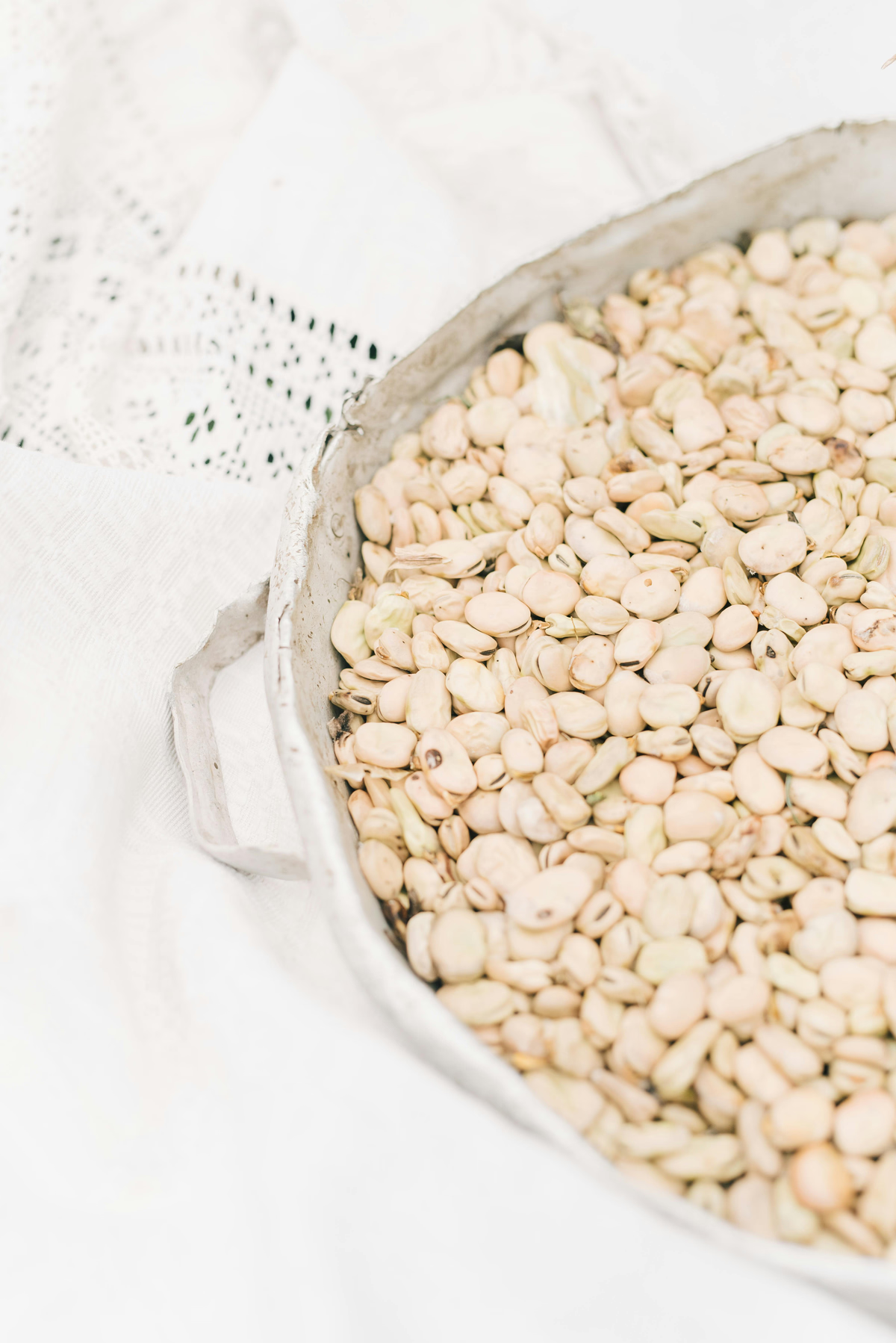
Navy beans are small, pea-sized beans that are creamy white in color. They are a mild-flavored bean that is dense and creamy.
History
Navy beans and other beans, such as pinto beans and black beans, are all known scientifically as Phaseolus vulgaris. They are referred to as “common beans” probably because they all derived from a common bean ancestor that originated in Peru.
From there, beans were spread throughout South and Central America by migrating Indian trades. Beans were introduced into Europe in the 15th century by Spanish explorers returning from their voyages to the New World. Spanish and Portuguese explorers brought them to Africa and Asia.
As beans are a very inexpensive form of good protein, they have become popular in many cultures throughout the world. The navy bean got its current popular name because it was a staple food of the United States Navy in the early 20th century. Today, the largest commercial producers of dried common beans, including the navy bean, are India, China, Indonesia, Brazil and the United States.
How to select and store
Dried navy beans are generally available in prepackaged containers as well as bulk bins. Just as with any other food that you may purchase in the bulk section, make sure that the bins are covered and that the store has a good product turnover rate to ensure maximal freshness.
Whether purchasing navy beans in bulk or in a packaged container, make sure there is no evidence of moisture or insect damage and that beans are whole and not cracked.
Canned navy beans can be found in most markets. Unlike canned vegetables, which have lost much of their nutritional value, there is little difference in the nutritional value of canned navy beans and those you cook yourself. Canning lowers vegetables’ nutritional value since they are best lightly cooked for a short period of time, while their canning process requires a long cooking time at high temperatures. On the other hand, beans require a long time to cook whether they are canned or you cook them yourself. Therefore, if enjoying canned beans is more convenient for you, by all means go ahead and enjoy them. We would suggest looking for those that do not contain extra salt or additives. (One concern about canned foods is the potential for the can to include a liner made from bisphenol A/BPA. To learn more about reducing your exposure to this compound, please read our write-up on the subject).
Store dried navy beans in an airtight container in a cool, dry and dark place where they will keep for up to 12 months. Cooked navy beans will keep fresh in the refrigerator for about three days if placed in a covered container.
Tips for preparing and cooking
Preparation
Before washing navy beans, spread them out on a dark colored plate or cooking surface to check for and remove stones, debris or damaged beans. Then place the beans in a strainer, rinsing them thoroughly under cool running water.
To shorten cooking time and make them easier to digest, navy beans should be presoaked. There are two basic methods for presoaking (presoaking has been found to reduce the raffinose-type oligosaccharides, sugars associated with causing flatulence.) For each, start by placing the beans in a saucepan with two to three cups of water per cup of beans.
The first method is to boil the beans for two minutes, take the pan off the heat, cover and allow to stand for two hours. The alternative method is to simply soak the beans in water for eight hours or overnight, placing the pan in the refrigerator so that the beans will not ferment. Before cooking the beans, drain the soaking liquid and rinse beans with clean water.
The healthiest way of cooking navy beans
To cook the beans, you can either cook them on the stovetop or use a pressure cooker. For the stovetop method, add three cups of fresh water or broth for each cup of dried beans. The liquid should be about one to two inches above the top of the beans.
Bring the beans to a boil and then reduce to a simmer, partially covering the pot. If any foam develops, simply skim it off during the simmering process. Navy beans generally take about one to one and one-half hours to become tender using this method.
Navy beans can also be cooked in a pressure cooker where they take about one-half hour to prepare. Regardless of cooking method, do not add any seasonings that are salty or acidic until after the beans have been cooked, since adding them earlier will make the beans tough and greatly increase the cooking time.
How to enjoy
Serving ideas
- Make a delicious sandwich spread by blending cooked navy beans in a food processor with olive or flax oil and your favorite herbs and spices.
- Add a protein punch to tomato soup by serving it with some pre-cooked navy beans mixed throughout.
- Mix cooked navy beans with olive oil, sage and garlic and serve on bruschetta.
- Combine navy beans with cooked roasted buckwheat and healthy sautéed onions and shiitake mushrooms for a hearty main dish.
- Use navy beans to make delicious and nutritious white chili.
- Add cooked and cooled navy beans to a salad of leeks and chard and top with a rosemary vinaigrette.
Individual concerns
Oxalate content
Navy beans consistently been determined to have high oxalate content. Oxalates are naturally occurring organic acids found in a wide variety of foods, and in the case of certain medical conditions, they must be greatly restricted in a meal plan to prevent over-accumulation inside the body. Our comprehensive article about oxalates will provide you with practical and detailed information about these organic acids, food, and health.
Nutritional profile
One cup (182g) at 255 calories provides fiber (68% DV), folate (64% DV), tryptophan (56.2% DV), copper (42% DV), manganese (42% DV), phosphorus (37% DV), vitamin B1 (36% DV), protein (30% DV), iron (24% DV), magnesium (23% DV).
A heavy enameled Dutch oven like the Le Creuset Signature Dutch Oven distributes heat evenly for slow-cooked beans and stews — the kind of piece that lasts a lifetime.
Recipes with Navy beans
Full Nutrient Profile
Related Articles
References
- Ensminger AH, Esminger M. K. J. e. al. Food for Health: A Nutrition Encyclopedia. Clovis, California: Pegus Press; 1986. 1986. PMID:15210.
- McIntosh M, Miller C. A diet containing food rich in soluble and insoluble fiber improves glycemic control and reduces hyperlipidemia among patients with type 2 diabetes mellitus. Nutr Rev 2001 Feb;59(2):52-5. 2001. https://doi.org/10.1111/j.1753-4887.2001.tb06976.x
- Menotti A, Kromhout D, Blackburn H, et al. Food intake patterns and 25-year mortality from coronary heart disease: cross-cultural correlations in the Seven Countries Study. The Seven Countries Study Research Group. Eur J Epidemiol 1999 Jul;15(6):507-15. 1999. https://doi.org/10.1023/a:1007529206050
- Queiroz Kda S, de Oliveira AC, Helbig E et al. Soaking the common bean in a domestic preparation reduced the contents of raffinose-type oligosaccharides but did not interfere with nutritive value. J Nutr Sci Vitaminol (Tokyo) 2002 Aug;48(4):283-9. 2002.
- Wood, Rebecca. The Whole Foods Encyclopedia. New York, NY: Prentice-Hall Press; 1988. 1988. PMID:15220. https://doi.org/10.1002/food.19770210206