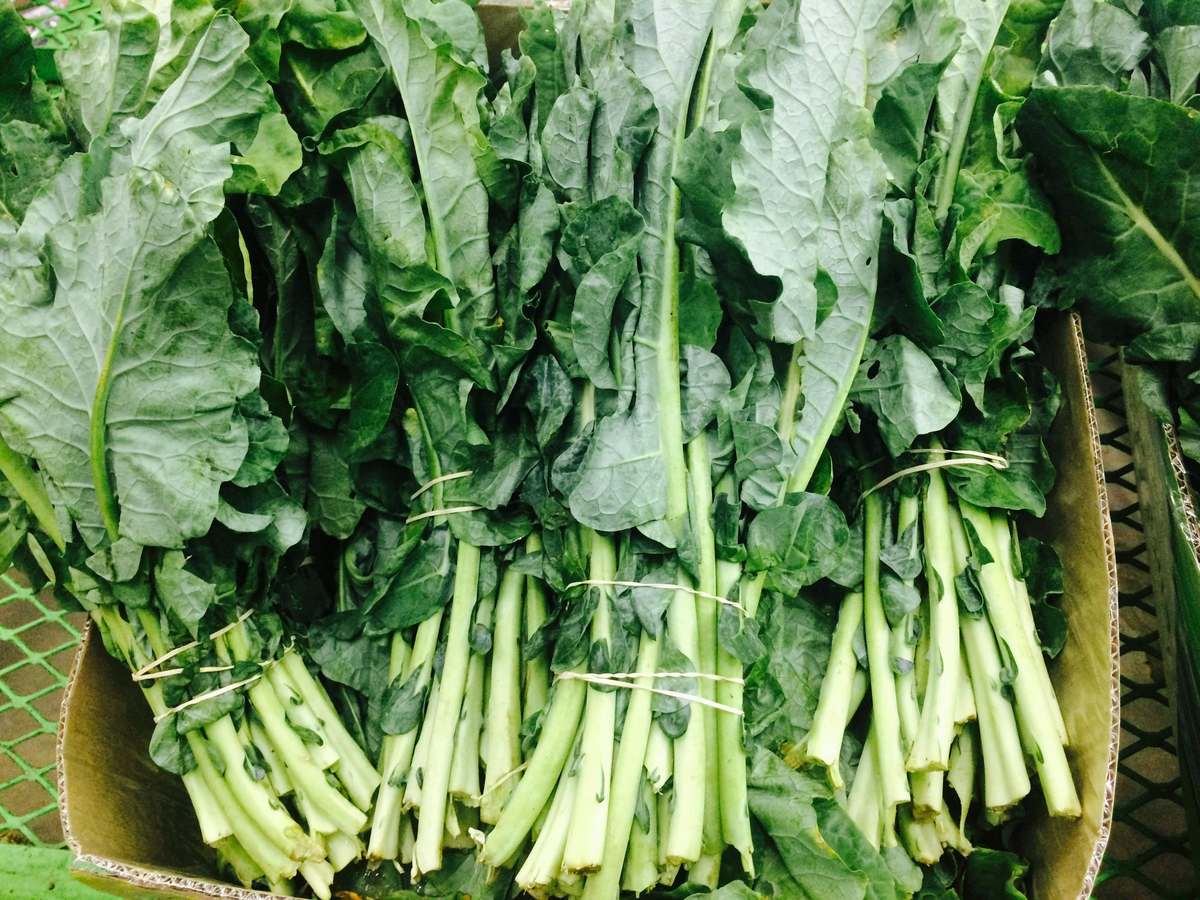
Collard Greens
Serving: 1.00 cup (190g, 63 cal)
Key Nutrients
| Nutrient | Amount | DV% | Rating |
|---|---|---|---|
| vitamin K | 772.54 mcg | 858% | Excellent |
| vitamin A | 722 mcg RAE | 80% | Excellent |
| vitamin C | 34.58 mg | 46% | Excellent |
| manganese | 0.97 mg | 42% | Excellent |
| fiber | 7.6 g | 27% | Excellent |
| calcium | 267.9 mg | 27% | Excellent |
| choline | 72.96 mg | 17% | Very Good |
| vitamin B2 | 0.2 mg | 15% | Very Good |
| vitamin B6 | 0.24 mg | 14% | Very Good |
| iron | 2.15 mg | 12% | Very Good |
| vitamin E | 1.67 mg (ATE) | 11% | Good |
| copper | 0.1 mg | 11% | Good |
| protein | 5.15 g | 10% | Good |
| magnesium | 39.9 mg | 10% | Good |
| phosphorus | 60.8 mg | 9% | Good |
| pantothenic acid | 0.41 mg | 8% | Good |
| folate | 30.4 mcg | 8% | Good |
| omega-3 fats | 0.18 g | 8% | Good |
| vitamin B3 | 1.09 mg | 7% | Good |
| vitamin B1 | 0.08 mg | 7% | Good |
| potassium | 222.3 mg | 6% | Good |
| tryptophan | 0.05 g | 15.6% | Very Good |
| vitamin B5 | 0.41 mg | 4.1% | Good |
| omega 3 fatty acids | 0.18 g | 7.5% | Good |
vitamin K
Excellentvitamin A
Excellentvitamin C
Excellentmanganese
Excellentfiber
Excellentcalcium
Excellentcholine
Very Goodvitamin B2
Very Goodvitamin B6
Very Goodiron
Very Goodvitamin E
Goodcopper
Goodprotein
Goodmagnesium
Goodphosphorus
Goodpantothenic acid
Goodfolate
Goodomega-3 fats
Goodvitamin B3
Goodvitamin B1
Goodpotassium
Goodtryptophan
Very Goodvitamin B5
Goodomega 3 fatty acids
GoodAbout Collard Greens
What’s new and beneficial about collard greens
- In a 2011 study by the Economic Research Service at the U.S. Department of Agriculture, collard greens turned out to be cheaper than many of their fellow cruciferous vegetables in terms of average U.S. price per edible cup (chopped and cooked). Cauliflower florets, turnip greens, mustard greens, broccoli florets, and kale showed up as being more expensive than collard greens after being trimmed to their edible portion and cooked. Among the cruciferous vegetables, only cabbage turned out to be less expensive than collard greens on a per cup basis (chopped and cooked). The affordable nature of collard greens is great news in terms of nutrition, since this cruciferous vegetable achieves 6 rankings of excellent, 4 rankings of very good, and 11 rankings of good in our WHF rating system!
- In a study on indigenous vegetable intake in the southeastern United States, collard greens were determined to provide the 4th greatest amount of antioxidant capacity related to overall dietary intake among 12 nutrient-rich foods in the study. In these research findings, collard greens ranked 4th behind sweet potato greens, mustard greens, and kale. Alongside of the four nutrient-rich greens listed above, this regional study also examined the antioxidant contributions of purple hull peas, rutabagas, eggplant, purslane, butter beans, butter peas, and green onions.
- Intake of collard greens has long been known to have the capacity to lower blood cholesterol levels, including blood levels of LDL cholesterol. But a recent study on cruciferous vegetables has taken our understanding of collards and cholesterol to a new level. In this study, researchers focused on the ability of fiber-like components in vegetables to bind together with bile acids. (When bound together with fiber-like components, bile acids are more readily excreted from our body, and following their excretion, our cells break apart some cholesterol into its component bile acids as a way of replacing the bound bile acids that got excreted. In this study, lab samples were obtained from eight steamed vegetables. These eight vegetables were: collard greens, kale, mustard greens, broccoli, Brussels sprouts, spinach, green bell pepper, and cabbage. The researchers then measured the ability of all eight vegetable samples to bind bile acids, and the winner of this measurement process was collard greens. In other words, steamed collard greens did a better job of binding together with bile acids than any of the seven other steamed vegetables. In this study, it is also worth noting that both raw collard greens and steamed collard greens showed bile acid binding ability, but steamed collard greens did a better job in this respect.
- Collard greens offer specific cancer-preventive compounds. The cancer-preventive properties of collard greens may be largely related to four specific glucosinolates found in this cruciferous vegetable: glucoraphanin, sinigrin, gluconasturtiian, and glucotropaeolin. Each of these glucosinolates can be converted into a corresponding isothiocyanate (ITC) that can help lower our cancer risk by supporting our body’s detox and anti-inflammatory systems.
- A second study from the southeastern United States found that among 35 commonly eaten foods, collards ranked second (behind chicken) as the most preferred food among older adults, outranking choices like cake and ice cream. Despite preconceptions about the taste and texture of leafy greens, well-prepared collards consistently win over new consumers.
Recommendations
Including collard greens as a regular cruciferous vegetable provides access to their glucosinolate and phytonutrient content. A minimum of 3/4 cup of cruciferous vegetables on a daily basis is recommended. This amount is equivalent to approximately 5 cups per week. A more optimal intake amount would be 1-1/2 cups per day, or about 10 cups per week. You can use our Veggie Advisor for help in figuring out your best cruciferous vegetable options.
It is very important not to overcook collard greens. Like other cruciferous vegetables overcooked collard greens will begin to emit the unpleasant sulfur smell associated with overcooking. To help collard greens to cook more quickly, evenly slice the leaves into 1/2-inch slices and the stems into 1/4-inch pieces. Let them sit for at least 5 minutes and then steam for 5 minutes Serve with our Mediterranean Dressing. See 5-Minute Collard Greens.
Collard Greens, chopped, cooked
1.00 cup
(190.00 grams)
Calories: 63
GI: very low
NutrientDRI/DV
vitamin K858%
vitamin A80%
vitamin C46%
manganese42%
fiber27%
calcium27%
choline17%
vitamin B215%
vitamin B614%
iron12%
copper11%
vitamin E11%
magnesium10%
protein10%
phosphorus9%
omega-3 fats8%
folate8%
pantothenic acid8%
vitamin B37%
vitamin B17%
- Health Benefits
- Description
- History
- How to Select and Store
- Tips for Preparing and Cooking
- How to Enjoy
- Individual Concerns
- Nutritional Profile
- References
Health benefits
Unlike broccoli and kale and cabbage, you won’t find many research studies devoted to the specific health benefits of collard greens. However, collard greens are sometimes included in a longer list of cruciferous vegetables that are lumped together and examined for the health benefits they provide. Based on a very small number of studies looking specifically at collard greens, and a larger number of studies looking at cruciferous vegetables as a group (and including collard greens on the list of vegetables studied), cancer prevention appears to be a standout area for collard greens with respect to their health benefits.
This connection between collard greens and cancer prevention should not be surprising since collard greens provide special nutrient support for three body systems that are closely connected with cancer development as well as cancer prevention. These three systems are (1) the body’s detox system, (2) its antioxidant system, and (3) its inflammatory/anti-inflammatory system. Chronic imbalances in any of these three systems can increase our risk of cancer, and when imbalances in all three systems occur simultaneously, our risk of cancer can increase significantly. Among all types of cancer, prevention of the following cancer types is most closely associated with intake of collard greens: bladder cancer, breast cancer, colon cancer, lung cancer, prostate cancer, and ovarian cancer.
Detox support provided by collard greens
The body’s detoxification process involves two distinct steps (Phase 1 and Phase 2), and collard greens provide nutrients that participate in both. In Phase 1 of detox, potentially toxic compounds are activated to make them more reactive. Phase 1 of detox requires strong antioxidant support, and collards are antioxidant-rich greens that contain phenols, polyphenols, and conventional antioxidant nutrients like vitamins C and E. In Phase 2 of detox, activated compounds get hooked together with specific nutrients to make them water-soluble and allow for excretion from the body. Here is where the detox support provided by collards is perhaps most unique. Collard greens provide us with unique sulfur-containing compounds called glucosinolates. These glucosinolates can be converted into related compounds called isothiocyanates, or ITCs. The ITCs made from glucosinolates in collard greens (and other cruciferous vegetables) have been shown to modify enzyme activity in Phase 2 of detox and increase the likelihood of detox success. The chart below shows some of the best-studied glucosinolates in collard greens and ITCs that can be made from each of them.
Glucosinolate
Derived Isothiocyanate
Isothiocyanate Abbreviation
glucobrassin
indole-3-carbinol*
I3C
glucoraphanin
sulforaphane
SFN
gluconasturtiian
phenethyl-isothiocyanate
PEITC
glucotropaeolin
benzyl-isothiocyanate
BITC
* Indole-3-carbinol (I3C) is not an isothiocyanate. It’s a benzopyrrole, and it is only formed when isothiocyanates made from glucobrassicin are further broken down into non-sulfur containing compounds.
The antioxidant benefits of collard greens
As an excellent source of vitamin C, vitamin A (in the form of carotenoids), and manganese, and a good source of vitamin E, collard greens provide us with four core conventional antioxidants. But the antioxidant support provided by collard greens extends far beyond the conventional nutrients into the realm of phytonutrients. Caffeic acid, ferulic acid, quercetin, and kaempferol are among the key antioxidant phytonutrients provided by collard greens. This broad spectrum antioxidant support helps lower the risk of oxidative stress in our cells. Chronic oxidative stress—meaning chronic presence over overly reactive oxygen-containing molecules and cumulative damage to our cells by these molecules—is a risk factor for development of most cancer types. By providing us with such a great array of antioxidant nutrients, collard greens help lower our cancer risk by helping us avoid chronic and unwanted oxidative stress.
Collard greens’ anti-inflammatory benefits
As an excellent source of vitamin K and a good source of omega-3 fatty acids (in the form of alpha-linolenic acid, or ALA), collard greens provide us with two hallmark anti-inflammatory nutrients. Vitamin K acts as a direct regulator of our inflammatory response, and ALA is the building block for several of the body’s most widely-used families of anti-inflammatory messaging molecules. In addition to these two anti-inflammatory components, one of the glucosinolates found in collard greens—glucobrassicin—can be readily converted into an isothiocyanate molecule called I3C, or indole-3-carbinol (I3C). I3C is an anti-inflammatory compound that can actually operate at the genetic level, and by doing so, prevent the initiation of inflammatory responses at a very early stage.
Like chronic oxidative stress and chronic weakened detox ability, chronic unwanted inflammation can significantly increase our risk of cancers and other chronic diseases (especially cardiovascular diseases).
Collard greens and cardiovascular support
Given the extensive list of antioxidant and anti-inflammatory nutrients provided by collard greens, it is not surprising that these greens provide us with cardiovascular support. In particular, many chronic blood vessel problems begin with excessive oxygen-related damage to blood vessel walls and blood constituents, as well as chronic inflammation.
Of particular interest with respect to collard greens has been the isothiocyanate (ITC) sulforaphane, which is made from glucoraphanin, one of the glucosinolates provided by collard greens. Not only does this ITC trigger anti-inflammatory activity in our cardiovascular system, it may also be able to help prevent and even possibly help reverse blood vessel damage.
A second area you can count on collard greens for cardiovascular support involves their cholesterol-lowering ability. As mentioned earlier in this profile, when we eat collard greens, fiber-related nutrients in this cruciferous vegetable bind together with some of the bile acids in the intestine in such a way that they simply stay inside the intestine and pass out of our body in a bowel movement, rather than getting absorbed along with the fat they have emulsified. When this happens, our liver needs to replace the lost bile acids by drawing upon our existing supply of cholesterol, and as a result, our cholesterol level drops down. Collard greens, in both raw and cooked form, have been shown to provide this cholesterol-lowering benefit. However, a recent study has shown that the cholesterol-lowering ability of raw collard greens improves when they are steamed. In addition to the support factors described above, it would be wrong to talk about the cardiovascular benefits of collard greens without mentioning their diverse array of B vitamins. Collard greens are a very good source of vitamins B2, B6, and choline, and a good source of vitamins B1, B3, folate, and pantothenic acid. A well-balanced intake of B vitamins - especially vitamins B6, B12, folate, and choline - can be important in controlling cardiovascular disease risk. Since excessive or deficient intake of these B vitamins can have an unwanted impact on your disease risk, it is great to have a food like collard greens that provide a helpful amount of so many B vitamins.
Collard greens and digestive support
The fiber content of collard greens—over 7 grams in every cup—makes this cruciferous vegetable a natural choice for digestive system support. Yet the fiber content of collard greens is only one of their digestive support mechanisms. Researchers have determined that the sulforaphane made from a glucosinolate in collard greens (glucoraphanin) helps protect the health of our stomach lining by preventing bacterial overgrowth of Helicobacter pylori in our stomach or too much clinging by this bacterium to our stomach wall.
Other health benefits from collard greens
The anti-inflammatory nature of glucosinolates/isothiocyanates and other nutrients found in collard greens has been the basis for new research on inflammation-related health problems and the potential role of collard greens in their prevention. Current and potentially promising research is underway to examine the benefits of collard greens in relationship to our risk of the following inflammation-related conditions: Crohn’s disease, inflammatory bowel disease, insulin resistance, irritable bowel syndrome, metabolic syndrome, obesity, rheumatoid arthritis, type 2 diabetes, and ulcerative colitis.
Description
All cruciferous vegetables provide integrated nourishment across a wide variety of nutritional categories and provide broad support across a wide variety of body systems as well. For more on cruciferous vegetables see:
- Eating Healthy with Cruciferous Vegetables
- Feeling Great with Cruciferous Vegetables
The Brassicaceae family of plants—more frequently referred to in previous years as the Cruciferae family includes a large number of edible plants. Many commonly enjoyed foods in this plant family come from a single genus/species of plant called Brassica oleracea. These foods include broccoli, Brussels sprouts, cabbage, cauliflower, kale, and kohlrabi. Collards come from this same genus/species as well, but also from a particular subspecies called Brassica oleracea subspecies viridis. Within this genus/species of plant, kale and collards are closely related since both belong to what is called the Acephala group. However, unlike kale, collards are relatively smooth in texture and relatively broad leafed, whereas kale can be more narrow and either curly or ruffled in texture. Depending on the specific variety of collard, this cruciferous vegetable can be mild-to-slightly strong in flavor. Some food writers have also referred to collards as slightly “smoky” in flavor. Raw collards can also sometimes be tougher in texture than their fellow leafy greens. It is also worth noting that unlike most varieties of cabbage, cauliflower, and broccoli, collard plants are loose-leafed and non-head-forming. Common varieties of collards enjoyed in the U.S. include Champion, Georgia Southern, Morris Heading, Vates, and Ole Timey Blue. Like most of their fellow greens, collards are considered cool season crops and do especially well in temperatures between 50-65°F (10-18°C).
History
Like kale, cauliflower, modern cabbage, Brussels sprouts, kohlrabi, and broccoli, collards are considered by many plant historians to be descendents of wild cabbage that was found in many parts of Europe over 2,000 years ago. This line of descent may be especially accurate for collards, since the ancestral wild cabbages in Europe were loose leafed and didn’t form a head, much like present-day collards and kale.
Collards are currently enjoyed worldwide as a staple part of different cuisines. Collards are staple vegetables in diets in some parts of East Africa (for example, in areas of Tanzania and Kenya); in some parts of South America (for example, in areas of Brazil); in southern Europe (especially Portugal); in south Asia (especially in the Kashmir Valley region); and also in the southeastern United States. As mentioned earlier in this profile, older adults in the southeastern United States still rank collard greens as their second most favorite food (after chicken), and collard greens still provide an unusual amount of the diet’s total antioxidant capacity for some individuals in this region of the U.S. We have not seen reliable data, however, for total collard green production or consumption in the U.S. or worldwide.
How to select and store
Look for collard greens that have firm, unwilted leaves that are vividly deep green in color with no signs of yellowing or browning. Leaves that are smaller in size will be more tender and have a milder flavor. They should be displayed in a chilled section in the refrigerator case to prevent them from wilting and becoming bitter.
Certified organically grown collard greens are recommended. Repeated research studies on organic foods as a group show that exposure to contaminants such as pesticides and heavy metals can be greatly reduced through the purchase of certified organic produce, including collard greens. In many cases, you may be able to find a local organic grower who sells collard greens but has not applied for formal organic certification either through the U.S. Department of Agriculture (USDA) or through a state agency. (Examples of states offering state-certified organic foods include California, New York, Oregon, Vermont, and Washington.) However, if you are shopping in a large supermarket, your most reliable source of organically grown collard greens is very likely to be collard greens that display the USDA organic logo.
Place collard greens in a plastic bag, removing as much of the air from the bag as possible. Store in the refrigerator where they should keep fresh for about three to five days.
The rationale for refrigerating collard greens is straightforward. Whenever food is stored, four basic factors affect its nutrient composition: exposure to air, exposure to light, exposure to heat, and length of time in storage. Vitamin C, vitamin B6, and carotenoids are good examples of nutrients highly susceptible to heat, and for this reason, their loss from food is very likely to be slowed down through refrigeration.
Tips for preparing and cooking
Preparation
Rinse collard greens under cold running water. Chop leaf portion into 1/2-inch slices and the stems into 1/4-inch pieces for quick and even cooking.
Cooking for nutrient retention
Quick Steaming is the recommended cooking method for collard greens, preserving both flavor and nutrients.
Quick Steaming (similar to Healthy Saute and Quick Boiling) follows three basic cooking guidelines associated with improved nutrient retention in food science research: (1) minimal necessary heat exposure; (2) minimal necessary cooking duration; (3) minimal necessary food surface contact with cooking liquid.
Fill the bottom of a steamer pot with 2 inches of water. While waiting for the water to come to a rapid boil chop greens. Steam for 5 minutes and toss with Mediterranean Dressing and top with your favorite optional ingredients. For details see 5-Minute Collard Greens.
How to enjoy
Serving ideas
- Serve steamed collard greens with black-eyed peas and brown rice for a Southern-inspired meal.
- Use lightly steamed, cooled, and chopped collard greens as a filling in your sushi vegetable rolls.
Recipes that feature collard greens
- Poached Eggs Over Collard Greens & Shiitake Mushrooms
- Italian Navy Bean Soup with Rosemary
- Zesty Mexican Soup
- 5-Minute Collard Greens
- Pinto Beans with Collard Greens
- Steamed Vegetable Medley
Individual concerns
Collard greens and goitrogens
You may sometimes hear collard greens being described as a food that contains “goitrogens,” or as a food that is “goitrogenic.” For helpful information in this area—including our WHF Recommendations—please see our article What is meant by the term “goitrogen” and what is the connection between goitrogens, food, and health?.
Nutritional profile
One cup (190g) at 63 calories provides vitamin K (858% DV), vitamin A (80% DV), vitamin C (46% DV), manganese (42% DV), fiber (27% DV), calcium (27% DV), choline (17% DV), tryptophan (15.6% DV), vitamin B2 (15% DV), vitamin B6 (14% DV), iron (12% DV), vitamin E (11% DV), copper (11% DV), protein (10% DV), magnesium (10% DV). Additional nutrients include phosphorus (9% DV), pantothenic acid (8% DV), folate (8% DV), omega-3 fats (8% DV), omega 3 fatty acids (7.5% DV), vitamin B3 (7% DV), vitamin B1 (7% DV), potassium (6% DV), among others. Phytonutrients in collard greens include phenols like caffeic and ferulic acid, flavonoids like quercetin and kaempferol, and glucosinolates like glucobrassicin and glucoraphanin.
A quality salad spinner like the OXO Good Grips Salad Spinner removes excess water quickly, which helps leafy greens cook evenly and keeps salads crisp.
Recipes with Collard Greens
- 5-Minute Collard Greens with Sunflower Seeds
- Mediterranean Dressing
- 5-Minute "Quick Steamed" Collard Greens
- Poached Eggs Over Collard Greens & Shiitake Mushrooms
- Italian Navy Bean Soup with Rosemary
- Zesty Mexican Soup
- Pinto Beans with Collard Greens
- Steamed Vegetable Medley
- 4-Minute Broccoli with Feta Cheese and Kalamata Olives
- 7-Minute "Quick Steamed" Butternut Squash
- 5-Minute "Quick Steamed" Brussels Sprouts
- Rosemary "Quick Broiled" Lamb
Full Nutrient Profile
Related Articles
- Can Preparation Methods Impact the Benefits of Cruciferous Vegetables?
- Can salads be a good source of calcium?
- Can you tell me more about chlorophyll, including what foods it can be found in and the effect that cooking has upon it?
- Do I need to eat dairy products in order to prevent osteoporosis?
- Eating Healthy with Cruciferous Vegetables
- Feeling Great with Cruciferous Vegetables
- How can my diet help protect me from sunburn?
- I've heard a lot about eating a "colorful diet." Should I pick fruits and vegetables based on color to help me get more benefits from these foods?
- Rejuvenating Foods for Springtime
- The World's Healthiest Foods Meal Plan Is Overflowing With Carotenoids
- Veggie Advisor: How do our vegetable recommendations at WHFoods compare with common public health recommendations?
- Veggie Advisor: What would you recommend for someone who has trouble getting excited about vegetables?
- What Do You Think About a Mostly Vegetarian-Plus-Dairy/Eggs Meal Plan?
- What is the dirty dozen?
- Which foods contain chlorophyll, and in what amount?
- Which fruits and vegetables contain the most pesticide residues?
References
- Ambrosone CB, Tang L. Cruciferous vegetable intake and cancer prevention: role of nutrigenetics. Cancer Prev Res (Phila Pa). 2009 Apr;2(4):298-300. 2009. https://doi.org/10.1158/1940-6207.capr-09-0037
- Angeloni C, Leoncini E, Malaguti M, et al. Modulation of phase II enzymes by sulforaphane: implications for its cardioprotective potential. J Agric Food Chem. 2009 Jun 24;57(12):5615-22. 2009. https://doi.org/10.1021/jf900549c
- Antosiewicz J, Ziolkowski W, Kar S et al. Role of reactive oxygen intermediates in cellular responses to dietary cancer chemopreventive agents. Planta Med. 2008 Oct;74(13):1570-9. 2008. https://doi.org/10.1055/s-2008-1081307
- Banerjee S, Wang Z, Kong D, et al. 3,3'-Diindolylmethane enhances chemosensitivity of multiple chemotherapeutic agents in pancreatic cancer. 3,3'-Diindolylmethane enhances chemosensitivity of multiple chemotherapeutic agents in pancreatic cancer. 2009.
- Bhattacharya A, Tang L, Li Y, et al. Inhibition of bladder cancer development by allyl isothiocyanate. Carcinogenesis. 2010 Feb;31(2):281-6. 2010. https://doi.org/10.1093/carcin/bgp303
- Brat P, George S, Bellamy A, et al. Daily Polyphenol Intake in France from Fruit and Vegetables. J. Nutr. 136:2368-2373, September 2006. 2006. https://doi.org/10.1007/s11095-008-9661-9
- Bryant CS, Kumar S, Chamala S, et al. Sulforaphane induces cell cycle arrest by protecting RB-E2F-1 complex in epithelial ovarian cancer cells. Molecular Cancer 2010, 9:47. 2010. https://doi.org/10.1186/1476-4598-9-47
- Carpenter CL, Yu MC, and London SJ. Dietary isothiocyanates, glutathione S-transferase M1 (GSTM1), and lung cancer risk in African Americans and Caucasians from Los Angeles County, California. Nutr Cancer. 2009;61(4):492-9. 2009. https://doi.org/10.1080/01635580902752270
- Christopher B, Sanjeez K, Sreedhar C, et al. Sulforaphane induces cell cycle arrest by protecting RB-E2F-1 complex in epithelial ovarian cancer cells. Molecular Cancer Year: 2010 Vol: 9 Issue: 1 Pages/record No.: 47. 2010. https://doi.org/10.1186/1476-4598-9-47
- Clarke JD, Dashwood RH, Ho E. Multi-targeted prevention of cancer by sulforaphane. Cancer Lett. 2008 Oct 8;269(2):291-304. 2008. https://doi.org/10.1016/j.canlet.2008.04.018
- Cornelis MC, El-Sohemy A, Campos H. GSTT1 genotype modifies the association between cruciferous vegetable intake and the risk of myocardial infarction. Am J Clin Nutr. 2007 Sep;86(3):752-8. 2007. https://doi.org/10.1093/ajcn/86.3.752
- Farnham MW, Davis EH, Morgan JT, et al. Neglected landraces of collard (Brassica oleracea L. var. viridis) from the Carolinas (USA). Genetic Resources and Crop Evolution September 2008, Volume 55, Issue 6, pages 797—801. https://doi.org/10.1007/s10722-007-9284-8
- Fowke JH, Morrow JD, Motley S, et al. Brassica vegetable consumption reduces urinary F2-isoprostane levels independent of micronutrient intake. Carcinogenesis, October 1, 2006; 27(10): 2096 - 2102. 2006. https://doi.org/10.1093/carcin/bgl065
- Higdon JV, Delage B, Williams DE, et al. Cruciferous Vegetables and Human Cancer Risk: Epidemiologic Evidence and Mechanistic Basis. Pharmacol Res. 2007 March; 55(3): 224-236. 2007. https://doi.org/10.1016/j.phrs.2007.01.009
- Hu J, Straub J, Xiao D, et al. Phenethyl isothiocyanate, a cancer chemopreventive constituent of cruciferous vegetables, inhibits cap-dependent translation by regulating the level and phosphorylation of 4E-BP1. Cancer Res. 2007 Apr 15;67(8):3569-73. 2007. https://doi.org/10.1158/0008-5472.can-07-0392
- Huang Z, Wang B, Eaves DH, et al. Total phenolics and antioxidant capacity of indigenous vegetables in the southeast United States: Alabama Collaboration for Cardiovascular Equality Project. Int J Food Sci Nut, March 2009; 60(2): 100-108. https://doi.org/10.1080/09637480701605715
- Hutzen B, Willis W, Jones S, et al. Dietary agent, benzyl isothiocyanate inhibits signal transducer and activator of transcription 3 phosphorylation and collaborates with sulforaphane in the growth suppression of PANC-1 cancer cells. Cancer Cell International 2009, 9:24. 2009. https://doi.org/10.1186/1475-2867-9-24
- Jiang H, Shang X, Wu H, et al. Combination treatment with resveratrol and sulforaphane induces apoptosis in human U251 glioma cells. Neurochem Res. 2010 Jan;35(1):152-61. 2010. https://doi.org/10.1007/s11064-009-0040-7
- Kahlon TS, Chiu MC, Chapman MH. Steam cooking significantly improves in vitro bile acid binding of collard greens, kale, mustard greens, broccoli, green bell pepper, and cabbage. 2008 Jun;28(6):351-7. 2008. https://doi.org/10.1016/j.nutres.2008.03.007
- Kelemen LE, Cerhan JR, Lim U, et al. Vegetables, fruit, and antioxidant-related nutrients and risk of non-Hodgkin lymphoma: a National Cancer Institute-Surveillance, Epidemiology, and End Results population-based case-control study. Am J Clin Nutr. 2006 Jun;83(6):1401-10. 2006. https://doi.org/10.1093/ajcn/83.6.1401
- Konsue N, Ioannides C. Modulation of carcinogen-metabolising cytochromes P450 in human liver by the chemopreventive phytochemical phenethyl isothiocyanate, a constituent of cruciferous vegetables. Toxicology. 2010 Feb 9;268(3):184-90. 2010. https://doi.org/10.1016/j.tox.2009.12.011
- Kunimasa K, Kobayashi T, Kaji K et al. Antiangiogenic effects of indole-3-carbinol and 3,3'-diindolylmethane are associated with their differential regulation of ERK1/2 and Akt in tube-forming HUVEC. J Nutr. 2010 Jan;140(1):1-6. 2010. https://doi.org/10.3945/jn.109.112359
- Lakhan SE, Kirchgessner A, Hofer M. Inflammatory mechanisms in ischemic stroke: therapeutic approaches. Journal of Translational Medicine 2009, 7:97. 2009. https://doi.org/10.1186/1479-5876-7-97
- Larsson SC, Andersson SO, Johansson JE, et al. Fruit and vegetable consumption and risk of bladder cancer: a prospective cohort study. Cancer Epidemiol Biomarkers Prev. 2008 Sep;17(9):2519-22. 2008. https://doi.org/10.1158/1055-9965.epi-08-0407
- Li F, Hullar MAJ, Schwarz Y, et al. Human Gut Bacterial Communities Are Altered by Addition of Cruciferous Vegetables to a Controlled Fruit- and Vegetable-Free Diet. Journal of Nutrition, Vol. 139, No. 9, 1685-1691, September 2009. 2009. https://doi.org/10.3945/jn.109.108191
- Lin J, Kamat A, Gu J, et al. Dietary intake of vegetables and fruits and the modification effects of GSTM1 and NAT2 genotypes on bladder cancer risk. Cancer Epidemiol Biomarkers Prev. 2009 Jul;18(7):2090-7. 2009. https://doi.org/10.1158/1055-9965.epi-08-1174
- Machijima Y, Ishikawa C, Sawada S, et al. Anti-adult T-cell leukemia/lymphoma effects of indole-3-carbinol. Retrovirology 2009, 6:7. 2009. https://doi.org/10.1186/1742-4690-6-7
- Moore LE, Brennan P, Karami S, et al. Glutathione S-transferase polymorphisms, cruciferous vegetable intake and cancer risk in the Central and Eastern European Kidney Cancer Study. Carcinogenesis. 2007 Sep;28(9):1960-4. Epub 2007 Jul 7. 2007. https://doi.org/10.1093/carcin/bgm151
- Nettleton JA, Steffen LM, Mayer-Davis EJ, et al. Dietary patterns are associated with biochemical markers of inflammation and endothelial activation in the Multi-Ethnic Study of Atherosclerosis (MESA). Am J Clin Nutr. 2006 Jun;83(6):1369-79. 2006. https://doi.org/10.1093/ajcn/83.6.1369
- Pagliaro B, Santolamazza C, Simonelli F, et al. Phytochemical Compounds and Protection from Cardiovascular Diseases: A State of the Art. Biomed Res Int. 2015;2015:918069. https://doi.org/10.1155/2015/918069
- Rungapamestry V, Duncan AJ, Fuller Z et al. Effect of cooking brassica vegetables on the subsequent hydrolysis and metabolic fate of glucosinolates. Proc Nutr Soc. 2007 Feb;66(1):69-81. 2007. https://doi.org/10.1017/s0029665107005319
- Silberstein JL, Parsons JK. Evidence-based principles of bladder cancer and diet. Urology. 2010 Feb;75(2):340-6. 2010. https://doi.org/10.1016/j.urology.2009.07.1260
- Steinbrecher A, Linseisen J. Dietary Intake of Individual Glucosinolates in Participants of the EPIC-Heidelberg Cohort Study. Ann Nutr Metab 2009;54:87-96. 2009. https://doi.org/10.1159/000209266
- Stewart H, Hyman J, Buzby JC, et al. How much do fruits and vegetables cost? U.S. Department of Agriculture (USDA) Economic Research Service (ERS), Economic Information Bulletin 71, February 2011. Washington, D.C.
- Tang L, Zirpoli GR, Jayaprakash V, et al. Cruciferous vegetable intake is inversely associated with lung cancer risk among smokers: a case-control study. BMC Cancer 2010, 10:162. 2010. https://doi.org/10.1186/1471-2407-10-162
- Tarozzi A, Morroni F, Merlicco A, et al. Sulforaphane as an inducer of glutathione prevents oxidative stress-induced cell death in a dopaminergic-like neuroblastoma cell line. J Neurochem. 2009 Dec;111(5):1161-71. 2009. https://doi.org/10.1111/j.1471-4159.2009.06394.x
- Thakur VS, Deb G, Babcook MA, et al. Plant Phytochemicals as Epigenetic Modulators: Role in Cancer Chemoprevention. AAPS J. 2014 Jan; 16(1): 151—163. https://doi.org/10.1208/s12248-013-9548-5
- Thompson CA, Habermann TM, Wang AH, et al. Antioxidant intake from fruits, vegetables and other sources and risk of non-Hodgkin's lymphoma: the Iowa Women's Health Study. Int J Cancer. 2010 Feb 15;126(4):992-1003. 2010. https://doi.org/10.1002/ijc.24830
- Tiwari U, Sheehy E, Rai D, Gaffney M, et al. Quantitative human exposure model to assess the level of glucosinolates upon thermal processing of cruciferous vegetables. LWT - Food Science and Technology, Volume 63, Issue 1, September 2015, pages 253-261. https://doi.org/10.1016/j.lwt.2015.03.088
- Zhang Y. Allyl isothiocyanate as a cancer chemopreventive phytochemical. Mol Nutr Food Res. 2010 Jan;54(1):127-35. 2010. https://doi.org/10.1002/mnfr.200900323