Carrots
Serving: 1.00 cup (122g, 50 cal)
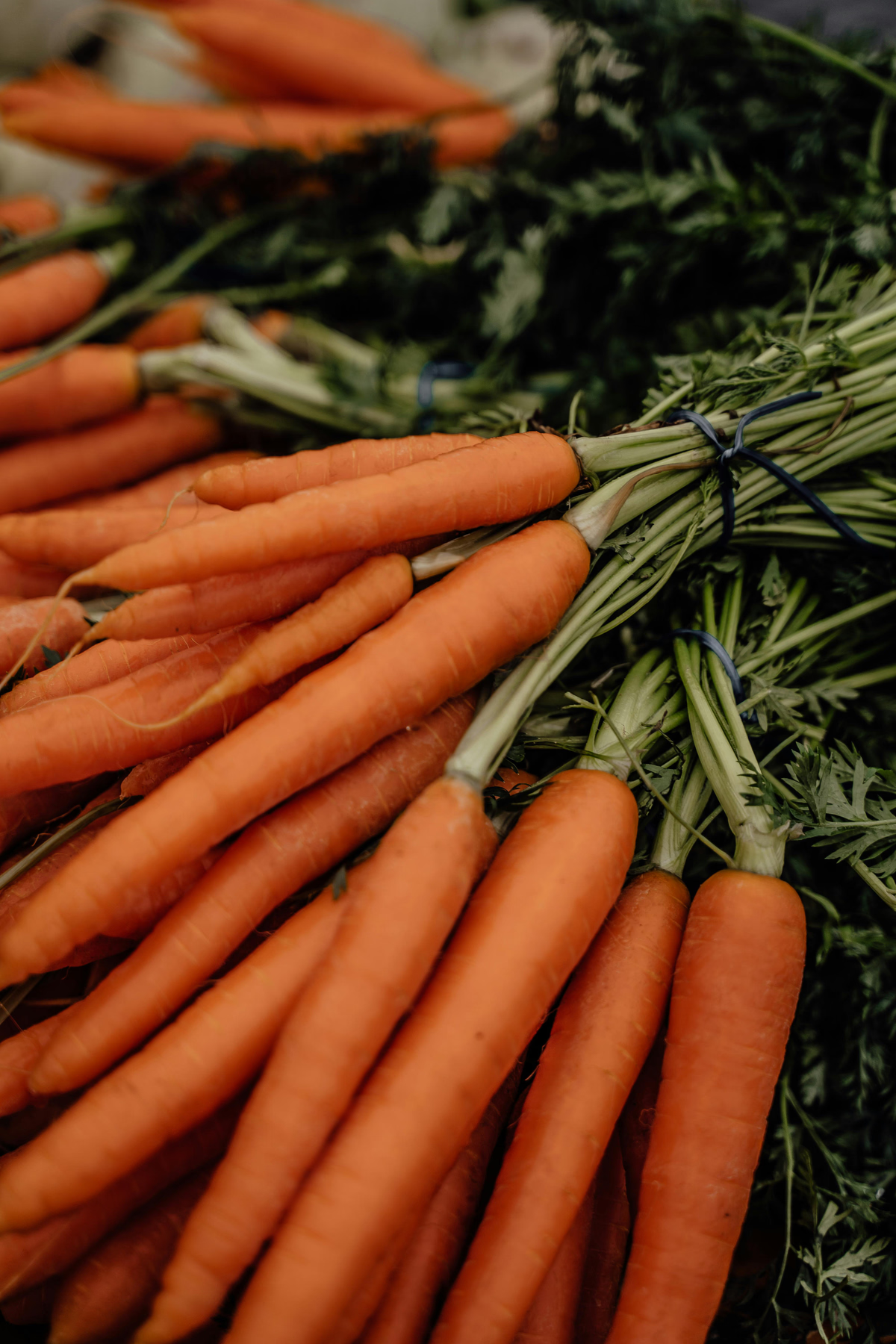
Key Nutrients
| Nutrient | Amount | DV% | Rating |
|---|---|---|---|
| vitamin A | 1019.07 mcg RAE | 113% | Excellent |
| biotin | 6.1 mcg | 20% | Very Good |
| vitamin K | 16.1 mcg | 18% | Very Good |
| molybdenum | 6.1 mcg | 14% | Very Good |
| fiber | 3.42 g | 12% | Very Good |
| vitamin B6 | 0.17 mg | 10% | Very Good |
| vitamin C | 7.2 mg | 10% | Very Good |
| potassium | 390.4 mg | 8% | Good |
| vitamin B3 | 1.2 mg | 8% | Good |
| manganese | 0.17 mg | 7% | Good |
| vitamin B1 | 0.08 mg | 7% | Good |
| pantothenic acid | 0.33 mg | 7% | Good |
| phosphorus | 42.7 mg | 6% | Good |
| folate | 23.18 mcg | 6% | Good |
| copper | 0.05 mg | 6% | Good |
| vitamin E | 0.81 mg (ATE) | 5% | Good |
| vitamin B2 | 0.07 mg | 5% | Good |
vitamin A
Excellentbiotin
Very Goodvitamin K
Very Goodmolybdenum
Very Goodfiber
Very Goodvitamin B6
Very Goodvitamin C
Very Goodpotassium
Goodvitamin B3
Goodmanganese
Goodvitamin B1
Goodpantothenic acid
Goodphosphorus
Goodfolate
Goodcopper
Goodvitamin E
Goodvitamin B2
GoodAbout Carrots
What’s new and beneficial about carrots
- Carrots were one of the vegetables examined in recent research on foods rich in beta-carotene and bone health. More specifically, intake of yellow/orange and green vegetables was evaluated to see if greater intake was related to greater bone mass. Interestingly, participants who ate at least one serving per day of yellow/orange or green vegetables had healthier bone mass than participants who ate less than one serving per day. In addition, participants who ate less than one serving per day actually had bone mass at a level that could put them at risk for bone-related health problems. What was most striking to us about this study was the relatively small amount of yellow/green vegetables associated with bone-health benefits. Through this research, we were reminded about how much can be accomplished with relatively small changes in a meal plan, especially changes that incorporate foods as rich in beta-carotene as carrots.
- Many people are familiar with a whitish type coating that can form on peeled carrots,especially baby carrots,called “white blush.” A recent study has helped us understand why this “white blush” occurs. When carrots are peeled, the process of peeling takes away the outermost protective layer of the carrot root. Without this outermost protective layer, the carrot has more difficulty retaining its full degree of moisture and becomes more easily dehydrated. This dehydration sets the stage for the “white blush” that we see. In addition, to help protect itself from damage following the loss of its outermost layer, the carrot may create a new protective layer of phenols, and this new phenol-based layer contributes to the appearance of “white blush.” Once re-immersed in water, however, the carrot cells can absorb some of the moisture that has been lost after peeling, and this rehydration of the carrot can also help restore its orange color. While we have yet to see research showing increased health benefits from the peeling of carrots, we like knowing that the “white blush” on carrots reflects a natural response to dehydration and the synthesis of phenolic substances, rather being than a cause for concern.
- Throughout our website, we recommend selection of certified organic foods as a way to reduce risk of unwanted contaminants and increase the chances for nutrient richness. A recent study comparing conventional versus organically grown carrots has added to the evidence for greater nutrient richness from organic growing methods. In this study, levels of carotenoids, phenols, and vitamin C were compared in organic versus non-organic carrots, with greater amounts being observed in all three categories in the organic carrots.
- Carrots are a vegetable commonly enjoyed in both raw and cook form. While we like the idea of both raw and cooked carrots in a healthy meal plan, we were also glad to see a new study on the impact of cooking on minerals in carrots. In this study, one of the methods chosen for cooking was a relatively short steaming time of 6 to 7 minutes. Our Quick Steaming method for carrots uses this same approach to carrot cooking with a somewhat shorter period of time (5 minutes). Six different minerals (potassium, phosphorus, iron, zinc, magnesium, and calcium) were evaluated in this study, and the average mineral loss for all six was less than 25% after 6 to 7 minutes of steaming. (Since our Quick Steaming time is somewhat shorter, we would also expect a somewhat lower percentage if our 5-minute cooking time was used.) We like the idea of retaining over 75% of these carrot minerals when carrots are steamed. Especially for people who greatly prefer cooked over raw carrots, this level of mineral retention makes the consumption of quick-steamed carrots highly worthwhile.
Intake recommendations
Orange carrots fall in the yellow/orange vegetable category. A minimum of 1/2 cup per day from this group is reasonable; one cup daily is more optimal. Sweet potatoes, yellow summer squash, and yellow corn also contribute to this category. Red or purple carrot varieties count toward the red/purple vegetable subgroup instead.
Health benefits
Carrots are perhaps best known for their rich supply of the antioxidant nutrient that was actually named for them: beta-carotene. However, these delicious root vegetables are the source not only of beta-carotene, but also of a wide variety of other health-supporting nutrients.
Antioxidant benefits of carrots
All varieties of carrots contain valuable amounts of antioxidant nutrients. Included in this category of nutrients are traditional antioxidants like vitamin C, as well as phytonutrient antioxidants like beta-carotene. In most varieties of carrots, beta-carotene is by far the most plentiful antioxidant nutrient, accounting for over 95% of all carotenoids in many carrot varieties. Other carotenoids typically present in carrots include alpha-carotene and lutein. Listed below are some of the more common antioxidant nutrients found in carrots.
- Carotenoids
- alpha-carotene
- beta-carotene
- lutein
- Hydroxycinnamic acids
- caffeic acid
- coumaric acid
- ferulic acid
- Anthocyanins
Nutritional profile
One cup (122g) at 50 calories provides vitamin A (113% DV), biotin (20% DV), vitamin K (18% DV), molybdenum (14% DV), fiber (12% DV), vitamin B6 (10% DV), vitamin C (10% DV). Additional nutrients include potassium (8% DV), vitamin B3 (8% DV), manganese (7% DV), vitamin B1 (7% DV), pantothenic acid (7% DV), phosphorus (6% DV), folate (6% DV), copper (6% DV), among others. Carrots are perhaps best known for their beta-carotene content. (The nutrient beta-carotene was actually named after the carrot!) While they can be an outstanding source of this phytonutrient, carrots actually contain a fascinating combination of phytonutrients, including other carotenoids (especially alpha-carotene and lutein); hydroxycinnamic acids (including caffeic, coumaric, ferulic); anthocyanins (in the case of purple and red carrots); and polyacetylenes (especially falcarinol and falcarindiol).
A sharp, heavy chef's knife makes quick work of dense vegetables. The Wüsthof Classic 8" Chef's Knife is forged from a single piece of steel and holds its edge.
Recipes with Carrots
- Asian Chicken Salad
- Barley Mushroom Soup
- Carrot Coconut Soup
- Minestrone Surprise
- Red Kidney Bean Soup with Lime Yogurt
- Super Energy Kale Soup
- 15-Minute Seared Tuna with Sage
- Poached Cod with Fennel and Cauliflower
- Holiday Turkey with Rice Stuffing & Gravy with Fresh Herbs
- Asian-Flavored Broccoli with Tofu
- Braised Kidney Beans & Sweet Potato
- Curried Lentils
- Miso Healthy Sauté
- Moroccan Eggplant with Garbanzo Beans
- Primavera Verde
- Great Antipasto Salad
- Super Carrot Raisin Salad
- Carrot Cashew Paté
- Carrots with Honey Mustard Sauce
- Garlic Dip
- Minted Carrots with Pumpkin Seeds
- Minted Green Peas & Carrots
- Steamed Vegetable Medley
- Mediterranean Dressing
- Asian Sautéed Cauliflower
- 7-Minute "Quick Steamed" Butternut Squash
- "Quick Steamed" Broccoli
- 3-Minute "Healthy Sautéed" Asparagus
- Moroccan Roasted Carrots — MK Library
Full Nutrient Profile
Related Articles
- Adverse Food Reactions: Environment and Cross Related Reactions
- Are bitter vegetables better for you?
- Budget-Conscious Ways to Purchase Organic Foods
- Can you give me more details about organic labeling?
- Can You Lose Weight with the Feeling Great Menu?
- Can you please direct me to where I can find a list of alkaline foods to help balance the excess acidity?
- Cooking and Nutrient Loss
- Foods for Fall
- Healthy Eating for Less
- High-Temperature Cooking & The World's Healthiest Foods
- How do cooking temperatures affect vegetable nutrients?
- How do pickles compare to raw cucumbers in terms of nutrition?
- How Does Cutting, Slicing, and Chopping Affect Fresh Vegetables?
- How to Help Avoid the Swine Flu and Seasonal Flu by Strengthening Your Immune System with the World's Healthiest Foods
- How to prepare great tasting vegetables with Nutrient-Rich Cooking
- Is Healthy Eating possible on a tight budget?
- Is it true that slightly cooked Carrots are better for you than raw Carrots?
- Latest Study on Organic Foods from Stanford University
- More Life Changing Stories From Our Readers
- Organic foods higher in vitamins, minerals, phytonutrients, lower in nitrates
- Problem 1 with "eating on the run"—getting distracted from the process of eating
- Problem 2 with "eating on the run" - eating too quickly for our body systems
- Should I Include Meatless Meals In My Diet?
- Veggie Advisor: Why are Vegetables So Indispensable for Healthy Eating?
- Veggie Advisor
- What is acrylamide and how is it involved with food and health?
- What is the best way to eat healthy during winter?
- What is the Special Nutritional Power found in Phytonutrients?
- Why the Healthiest Way of Eating Is Also the World's Safest Way of Eating
References
- Alegria C, Goncalves EM, Moldao-Martins M, et al. Peel removal improves quality without antioxidant loss, through wound-induced phenolic biosynthesis in shredded carrot. Postharvest Biology and Technology, Volume 120, October 2016, pages 232-239. https://doi.org/10.1016/j.postharvbio.2016.07.004
- Arscott SA, Simon PW, and Tanumihardjo SA. Anthocyanins in purple-orange carrots (Daucus carota L.) do not influence the bioavailability of beta-carotene in young women. J Agric Food Chem. 2010 Mar 10;58(5):2877-81. https://doi.org/10.1021/jf9041326
- Aydin O Bayindirli L, and Artik N. Effect of peeling methods on quality of carrots. GIDA - Journal of Food, 2010, 35, 3, pages 169-175.
- Daiuto ER, Vieites RL, Pigoli DR, et al. Minerals stability in vegetables submitted to different cooking methods. Nativa: Pesquisas Agrárias e Ambientais, 2015, 3, 2, pages 102-108. (Spanish). https://doi.org/10.31413/nativa.v3i2.2032
- de Jesus Ornelas-Paz J , Yahia EM and Gardea-Bejar AA. Bioconversion Efficiency of B-Carotene from Mango Fruit and Carrots. Vitamin A Journal: American Journal of Agricultural and Biological Science Year: 2010 Vol: 5 Issue: 3 Pages/record No.: 301-308. 2010. https://doi.org/10.1016/j.plipres.2018.04.004
- Fujii H, Noda T, Sairenchi T, et al. Daily intake of green and yellow vegetables is effective for maintaining bone mass in young women. J Exp Med. 2009 Jun;218(2):149-54. https://doi.org/10.1620/tjem.218.149
- Gautam S, Platel K, and Sarinivasan K. Assessment of zinc deficiency and effect of dietary carrot, amchur and onion on zinc status during repletion in zinc-deficient rats. J Sci Food Agric. 2012 Jan 15;92(1):165-70. https://doi.org/10.1002/jsfa.4558
- Geetha P. Effect of pre-treatments and packaging on shelf life of minimally processed carrots. Madras Agricultural Journal, 2015, 102, 7/9, pp 268-272.Imsic M, Winkler S, Tomkins B et al. Effect of storage and cooking on beta-carotene isomers in carrots ( Daucus carota L. cv. 'Stefano'). J Agric Food Chem. 2010 Apr 28;58(8):5109-13. 2010. https://doi.org/10.29321/maj.10.001116
- Kjellenberg L, Johansson E, Gustavsson KE et al. Effects of harvesting date and storage on the amounts of polyacetylenes in carrots, Daucus carota. J Agric Food Chem. 2010 Nov 24;58(22):11703-8. Epub 2010 Oct 21. 2010.
- Kobaek-Larsen M, El-Houri RB, Christensen LP, et al. Dietary polyacetylenes, falcarinol and falcarindiol, isolated from carrots prevents the formation of neoplastic lesions in the colon of azoxymethane-induced rats. Food Funct. 2017 Mar 22;8(3):964-974. doi: 10.1039/c7fo00110j. https://doi.org/10.1039/c7fo00110j
- Lemmens L, Colle IJ, Van Buggenhout S et al. Quantifying the influence of thermal process parameters on in vitro B-carotene bioaccessibility: a case study on carrots. J Agric Food Chem. 2011 Apr 13;59(7):3162-7. Epub 2011 Mar 15. 2011.
- Mahesh M, Bharathi M, Raja Gopal Reddy M, et al. Carrot juice ingestion attenuates high fructose-induced circulatory pro-inflammatory mediators in weanling Wistar rats. J Sci Food Agric. 2017 Mar;97(5):1582-1591. https://doi.org/10.1002/jsfa.7906
- Mahesh M, Bharathi M, Reddy MR, et al. Carrot Juice Administration Decreases Liver Stearoyl-CoA Desaturase 1 and Improves Docosahexaenoic Acid Levels, but Not Steatosis in High Fructose Diet-Fed Weanling Wistar Rats. Prev Nutr Food Sci. 2016 Sep;21(3):171-180. https://doi.org/10.3746/pnf.2016.21.3.171
- Matejkova J and Petrikova K. Variation in Content of Carotenoids and Vitamin C in Carrots . Notulae Scientia Biologicae Year: 2010 Vol: 2 Issue: 4 Pages/record No.: 88-91. 2010. https://doi.org/10.15835/nsb245108
- Agricultural Marketing Resource Center (AgMRC). Carrot Profile. 2011;Iowa State University, Ames, IO. Available online at: http://www.agmrc.org. 0.
- Imsic M, Winkler S, Tomkins B et al. Effect of storage and cooking on beta-carotene isomers in carrots ( Daucus carota L. cv. 'Stefano'). J Agric Food Chem. 2010 Apr 28;58(8):5109-13. 2010. https://doi.org/10.3390/foods8090424
- Lin BH and Lucier G. Carrot Consumption Varies With Age, Income, and Race. Amber Waves. Washington: Apr 2008. Vol. 6, Iss. 2; p. 4. 2008. https://doi.org/10.22004/ag.econ.123223
- Metzger BT and Barnes DM. Polyacetylene diversity and bioactivity in orange market and locally grown colored carrots (Daucus carota L.). J Agric Food Chem. 2009 Dec 9;57(23):11134-9. 2009. https://doi.org/10.1021/jf9025663
- Morizet D, Depezay L, Masse P et al. Perceptual and lexical knowledge of vegetables in preadolescent children. Appetite. 2011 Aug;57(1):142-7. Epub 2011 Apr 16. 2011. https://doi.org/10.1016/j.appet.2011.04.006
- Neri L, Hernando Hernando I, Perez-Munuera I et al. Effect of blanching in water and sugar solutions on texture and microstructure of sliced carrots. J Food Sci. 2011 Jan-Feb;76(1):E23-30. doi: 10.1111/j.1750-3841.2010.01906.x. Epub 2010 Nov 29. 2011. https://doi.org/10.1111/j.1750-3841.2010.01906.x
- Nicolle C, Simon G, Rock E et al. Genetic Variability Influences Carotenoid, Vitamin, Phenolic, and Mineral Content in White, Yellow, Purple, Orange, and Dark-orange Carrot Cultivars. J. Amer. Soc. Hort. Sci., Jul 2004; 129: 523-529. 2004. https://doi.org/10.1038/hortres.2014.15
- Oude Griep LM, Monique Verschuren WM, Kromhout D et al. Colours of fruit and vegetables and 10-year incidence of CHD. Br J Nutr. 2011 Jun 8:1-8. [Epub ahead of print]. 2011. https://doi.org/10.1017/s0007114511001942
- Purup S, Larsen E and Christensen LP. Differential Effects of Falcarinol and Related Aliphatic C17-Polyacetylenes on Intestinal Cell Proliferation. J Agric Food Chem. 2009 September 23; 57(18): 8290,8296. 2009. https://doi.org/10.3390/molecules28207161
- Rennie C and Wise A. Preferences for steaming of vegetables. J Hum Nutr Diet. 2010 Feb;23(1):108-10. Epub 2009 Nov 23. 2010. https://doi.org/10.1017/s0954422416000056
- Soltoft M, Bysted A, Madsen KH et al. Effects of organic and conventional growth systems on the content of carotenoids in carrot roots, and on intake and plasma status of carotenoids in humans. J Sci Food Agric. 2011 Mar 15;91(4):767-75. doi: 10.1002/jsfa.4248. Epub 2011 Jan 6. 2011. https://doi.org/10.1002/jsfa.4248
- Tang G. Bioconversion of dietary provitamin A carotenoids to vitamin A in humans. Am J Clin Nutr. 2010 May;91(5):1468S-1473S. Epub 2010 Mar 3. 2010. https://doi.org/10.3945/ajcn.2010.28674g
- Theodosiou M, Laudet V and Schubert M. . From carrot to clinic: an overview of the retinoic acid signaling pathway. Cellular and Molecular Life Sciences. Basel: May 2010. Vol. 67, Iss. 9; p. 1423-1445. 2010.
- Wang ZX, Dong PC, Sun TT et al. [Comparison of lutein, zeaxanthin and B-carotene level in raw and cooked foods consumed in Beijing]. Zhonghua Yu Fang Yi Xue Za Zhi. 2011 Jan;45(1):64-7. Chinese. 2011.
- Zidorn C, Johrer K, Ganzera M et al. Polyacetylenes from the Apiaceae vegetables carrot, celery, fennel, parsley, and parsnip and their cytotoxic activities. J Agric Food Chem. 2005 Apr 6;53(7):2518-23. 2005. https://doi.org/10.1021/jf048041s
- Purup S, Larsen E and Christensen LP. Differential Effects of Falcarinol and Related Aliphatic C17-Polyacetylenes on Intestinal Cell Proliferation. J Agric Food Chem. 2009 September 23; 57(18): 8290–8296. 2009. https://doi.org/10.3390/molecules28207161
- Agricultural Marketing Resource Center (AgMRC). Carrot Profile. 2011;Iowa State University, Ames, IO. Available online at: http://www.agmrc.org.
- de Jesus Ornelas-Paz J , Yahia EM and Gardea-Bejar AA. . Bioconversion Efficiency of B-Carotene from Mango Fruit and Carrots. Vitamin A Journal: American Journal of Agricultural and Biological Science Year: 2010 Vol: 5 Issue: 3 Pages/record No.: 301-308. 2010.
- Lin BH and Lucier G. . Carrot Consumption Varies With Age, Income, and Race. Amber Waves. Washington: Apr 2008. Vol. 6, Iss. 2; p. 4. 2008.
- Metzger BT and Barnes DM. . Polyacetylene diversity and bioactivity in orange market and locally grown colored carrots (Daucus carota L.). J Agric Food Chem. 2009 Dec 9;57(23):11134-9. 2009.
- Neri L, Hernando Hernando I, Perez-Munuera I et al. . Effect of blanching in water and sugar solutions on texture and microstructure of sliced carrots. J Food Sci. 2011 Jan-Feb;76(1):E23-30. doi: 10.1111/j.1750-3841.2010.01906.x. Epub 2010 Nov 29. 2011. https://doi.org/10.1111/j.1750-3841.2010.01906.x
- Purup S, Larsen E and Christensen LP. Differential Effects of Falcarinol and Related Aliphatic C17-Polyacetylenes on Intestinal Cell Proliferation. J Agric Food Chem. 2009 September 23; 57(18): 8290â\x80\"8296. 2009. https://doi.org/10.3390/molecules28207161